Mix-and-match
Explore content in our extensive library and pull it together into your own Jewish ritual booklet that honors and recognizes whatever life has brought your way.
Share a ritual
Add your own original content as a clip to our extensive library - a poem, blessing, or something else entirely. Someone out there is looking for exactly what only you can create.
Support us
with your donation.
Help us build moments of meaning and connection through home-based Jewish rituals.
Featured ritual books

Experiencing Shabbat During a Fertility Journey
Preview
Navigating a Fertility Journey
Preview

Exploring Tashlich during a Fertility Journey
Preview
B'nai Mitzvah Service
Preview

showing
1-6
of
39
Page
1
of
7
Featured clips
Pesach is many things to many people. Its customs are familiar and can be viewed with many lenses. The symbols are universal and are subject to almost any reading: social justice, class, the Holocaust, Middle East politics, American politics, agriculture, the environment, the list is endless, and the proliferation of interpretations is evidence that this is fertile territory.
A few things – maybe only two – about the holiday are unavoidable, as in, Pesach wouldn't be Pesach if not for these things. One is symbolic/metaphorical, the other is cultural. The most important theme of Pesach is freedom from slavery. The holiday commemorates the time when the Hebrews were freed from slavery in Egypt. We eat unleavened bread, which is cheap road food. The charoset symbolizes mortar used by the slaves to make bricks. Every symbol is meant to remind us that these people were slaves. Slavery – actual, physical forced labor – provides a vivid frame of reference to talk about all other kinds of oppression: colonialism, the 1%, governments, mental illness, bullies, crime, the criminal justice system, corporate welfare. Pesach is the holiday where we openly celebrate the oppressed, the underdog. So, unlike other more nationalistic holidays like Hanukah, Pesach is really a day for us to remember the oppressed.
The cultural aspect of the holiday that is unavoidable is that it is Jewish. For most non-practicing, non-believing Jews, Pesach is the one annual event where we remember our Jewishness. We observe the customs. We sing in Hebrew. We eat traditional food. We inhabit the world of our ancestors, both known and unknown, recent and ancient.
All seders are the same at their core, and every seder is unique. Seders are both modular and constant. They have a dual nature. Seder means "order," implying that there are rules, but the order goes only so far. This is a holiday that celebrates freedom after all. So interpret each ritual and symbol in your own way.
Unavoidable Meanings
Preview
More
Our story starts in ancient times, with Abraham, the first person to have the idea that maybe all those little statues his contemporaries worshiped as gods were just statues. The idea of one God, invisible and all-powerful, inspired him to leave his family and begin a new people in Canaan, the land that would one day bear his grandson Jacob’s adopted name, Israel.
God had made a promise to Abraham that his family would become a great nation, but this promise came with a frightening vision of the troubles along the way: “Your descendants will dwell for a time in a land that is not their own, and they will be enslaved and afflicted for four hundred years; however, I will punish the nation that enslaved them, and afterwards they shall leave with great wealth."
Raise the glass of wine and say:
וְהִיא שֶׁעָמְדָה לַאֲבוֹתֵֽינוּ וְלָֽנוּ
V’hi she-amda l’avoteinu v’lanu.
This promise has sustained our ancestors and us.
For not only one enemy has risen against us to annihilate us, but in every generation there are those who rise against us. But God saves us from those who seek to harm us.
The glass of wine is put down.
In the years our ancestors lived in Egypt, our numbers grew, and soon the family of Jacob became the People of Israel. Pharaoh and the leaders of Egypt grew alarmed by this great nation growing within their borders, so they enslaved us. We were forced to perform hard labor, perhaps even building pyramids. The Egyptians feared that even as slaves, the Israelites might grow strong and rebel. So Pharaoh decreed that Israelite baby boys should be drowned, to prevent the Israelites from overthrowing those who had enslaved them.
But God heard the cries of the Israelites. And God brought us out of Egypt with a strong hand and outstretched arm, with great awe, miraculous signs and wonders. God brought us out not by angel or messenger, but through God’s own intervention.
Telling our Story
Preview
More
Kavanah Introduction
Preview
More
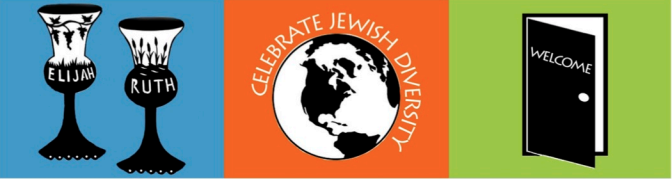
Ruth's Cup: A New Passover Ritual Celebrating Jewish Diversity
Preview
More
The Shehecheyanu is a prayer that Jews have been saying for over 2000 years to mark special occasions. Tonight, all of us here together is special occasion. Whether Jewish or not, we have come here under a shared belief that everyone is entitled to be free. We all believe that everyone is entitled to certain inalienable rights. We all believe that we must treat our brothers and sisters with common decency. That is special and meaningful.
To mark this special and meaningful occasion, we all join together in the words of the Shehecheyanu:
בָרוּךְ אַתָה יְיָ אֱלֹהֵינוּ מֶלֶךְ הָעוֹלָם שֶהֶחֱיָנוּ וְקִיְמָנוּ
וְהִגִּיעָנוּ לַזְמַן הַזֶה
Baruch atah, Adonai, eloheinu melech ha’olam,
shehecheyanu v’kiy’manu v’higiyanu lazman hazeh.
Blessed are you, Adonai, sovereign of all worlds, who has kept us alive, sustained us, and enabled us to reach this moment.
The Shehecheyanu
Preview
More
Remnants in the ghettos and death camps rose up against the wicked ones and slew many of them before they themselves died. In 1943, on the first night of Pesach, remnants of the Warsaw Ghetto rose up against the adversary. They were lovely and pleasant in their lives, and in their death they brought redemption to the name of Israel through all the world. In their honor this song was written and sung:
Zog nit keyn mol az du geyst dem letstn veg khotsh himlen blayene farshteln bloye teg. Kumen vet nokh undzer oysgebenkte sho– S’vet a poyk ton undzer trot–mir zaynen do!
Fun grinem palmenland biz vaysn land fun shney, Mir kumen on mit undzer payn, mit undzer vey. Un vu gefaln s’iz a shprits fun unzer blut, Shprotsn vet dortn undzer gvure, undzer mut.
Es vet di morgnzun bagildn undz dem haynt, Un der nekhtn vet farshvindn mitn faynd. Nor oyb farzamen vet di zun in dem kayor– Vi a parol zol geyn dos lid fun dor tsu dor.
Dos lid geshribn iz mit blut un nit mit blay. S’iz nit keyn lidl fun a foygl af der fray. Dos hot a folk tsvishn falndike vent Dos lid gezungen mit naganes in di hent!
To zog nit keyn mol az du geyst dem letstn veg....
Never say that there is only death for you Though leaden skies may be concealing days of blue— Because the hour that we’ve hungered for is near; Beneath our tread the earth shall tremble: We are here!
From land of palm-tree to the far-off land of snow We shall be coming without torment and our woes, And everywhere our blood has sunk into the earth Shall our bravery, our vigor blossom forth!
We’ll have the morning sun to set our day aglow, And all our yesterdays shall vanish without the foe, And if the time is long before the sun appears; Then let this song go like a signal through the years.
This song was written with our blood and not with lead; It’s not a song that birds sing overhead It was a people, among toppling barricades, That sang this song of ours with pistols and grenades.
So, never say that there is only death for you Though leaden skies may be concealing days of blue— Because the hour that we’ve hungered for is near; Beneath our tread the earth shall tremble: We are here!
Zog Nit Keyn Mol
Preview
More
showing
1-6
of
234
Page
1
of
39