Mix-and-match
Explore content in our extensive library and pull it together into your own Jewish ritual booklet that honors and recognizes whatever life has brought your way.
Share a ritual
Add your own original content as a clip to our extensive library - a poem, blessing, or something else entirely. Someone out there is looking for exactly what only you can create.
Support us
with your donation.
Help us build moments of meaning and connection through home-based Jewish rituals.
Featured clips
1. Do you know how your parents met?
2. Do you know where your mother grew up?
3. Do you know where your father grew up?
4. Do you know where some of your grandparents grew up?
5. Do you know where some of your grandparents met?
6. Do you know where your parents were married?
7. Do you know what went on when you were born?
8. Do you know the source of your name?
9. Do you know some things about what happened when your brothers or sisters were born?
10.Do you know which person in your family you look most like?
11. Do you know which person in the family you act most like?
12.Do you know some of the illnesses and injuries that your parents experienced when they were younger?
13.Do you know some of the lessons that your parents learned from good or bad experiences?
14.Do you know some things that happened to your mom or dad when they were in school?
15.Do you know the national background of your family (such as English, German, Russian, etc.)?
16.Do you know some of the jobs that your parents had when they were young?
17.Do you know some awards that your parents received when they were young?
18.Do you know the names of the schools that your mom went to?
19.Do you know the names of the schools that your dad went to?
20.Do you know about a relative whose face “froze” in a grumpy position because he or she did not smile enough?
* THE DO YOU KNOW SCALE, a measure developed by Dr. Marshall Duke and Dr. Robyn Fivush of Emory University, is comprised of 20 questions seeking knowledge about family history. Children who score high on the DYK scale are associated with higher levels of self-esteem, better family functioning,
lower levels of anxiety, fewer behavioral problems, an internal locus of control, (Locus of control refers to the extent to which people feel that they have control over the events that influence their lives) and better chances for good outcomes if faced with educational or emotional/behavioral difficulties. The questions test knowledge of things that children could not possibly have learned first hand but from others through stories, writings or other indirect resources.
Researchers have begun to establish a causal link between storytelling and thriving. In 2001, psychologists Marshall Duke and Robyn Fvush compared children's psychological health with their knowledge of their own family history. They measured this knowledge on a "Do You Know?" scale. This scale turned out to be the best single predictor of children's emotional health and happiness.
The more children knew their family's history, the stronger their sense of control over their lives, the higher their self-esteem, and the more successfully they believed their families functioned.
Two months after this study was conducted, the September 11 attacks occurred. The psychologists went back and studied how the same group of children responded to that trauma. The results were the same: "The ones who knew more about their families proved to be more resilient, meaning they could moderate the effects of stress."
To explain the connection between story and resilience, the psychologists coined the term ‘intergenerational self.’ It's a sense that you're part of something bigger, that your life is an episode in a larger narrative. More than just entertain and amuse, (which they do) cross-generational stories serve another purpose.
Family stories let children know that they're not alone, and that those who came before them celebrated triumphs and overcame struggles, just as they do.
Additionally, in a study of family stories at Emory University, it was found that family stories seem to be transferred by mothers and grandmothers more often than not, and that the information was typically passed during family dinners, family vacations and family holidays. Other data indicated that these very same regular family dinners, vacations, and holiday celebrations occur more frequently in families that have high levels of cohesiveness. It is the ‘intergenerational self’ and the personal strength that is derived from it that are associated with increased resilience, better adjustment, and improved chances of good clinical and educational outcomes.
The researchers define three types of family narratives:
1. The ascending narrative: we came from nothing and now we've succeeded (rags to riches).
2. The descending narrative: we used to have it all and now we have nothing.
3. And, the most healthful narrative is called the oscillating family narrative: we've had ups and downs, and we've persevered, as a family.
This third narrative is the story of the Jewish people.
When we share stories - especially over holidays - year after year after year, we invite the next generation into the Jewish family story. Our stories are still unfolding.
Building Resilience Through Family Stories
Preview
More
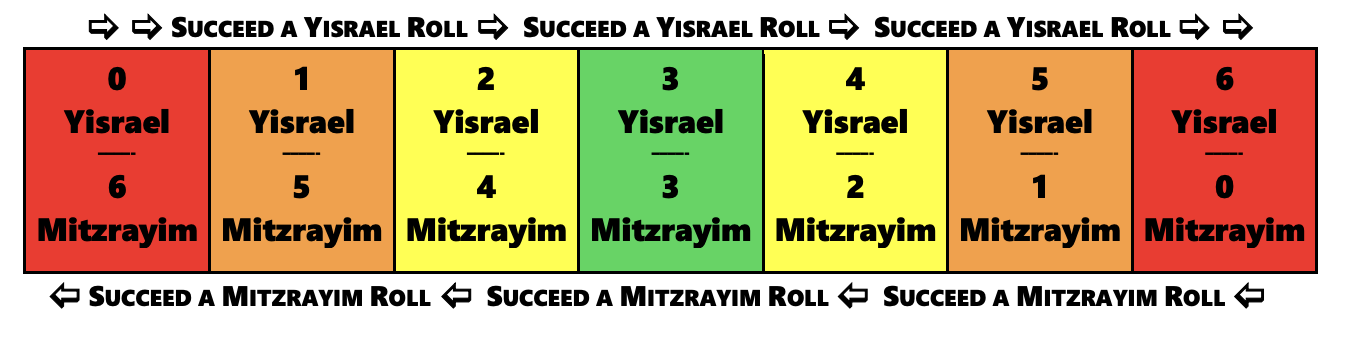
You are an Israelite about to leave Egypt during the Exodus story. Roll three d6 to determine your Character’s Type, Descriptor, and Job. Note the results on an Israelite Character Sheet.
Type
Descriptor
Job in Egypt
Now, give your Character a name, and decide if and how they know any other Characters.
An Item from the Neighbors
When the Israelites left, they took along items from their Egyptian neighbors. Roll a d6 to determine what special item you have:
Created by David Loewy (with thanks to Grant Howitt for the inspiration)
This Passover, transform your afikoman search into an epic quest. Use this roleplaying game as the Tzafun step of your seder, in place of the Maggid, or as an alternative seder during the rest of the holiday. Participants will play through a crucial moment of the Exodus from Egypt.
This is a game of choice, chance, and imagination. A Storyteller presents a series of scenarios and challenges, and the Players decide what their Characters do in response. There will be a particular goal to accomplish within the story, but Characters have to figure out how they accomplish that goal. The roll of the dice will determine whether they succeed or fail in those efforts. Players “win” when at least one of them is able to accomplish that story’s goal.
You will need:
MISSION FROM MOSES: An Afikoman Adventure a Passover Role-Playing Game
Preview
More
showing
1-6
of
53
Page
1
of
9
Featured ritual books

Mission From Moses
Preview

B'nai Mitzvah Service
Preview
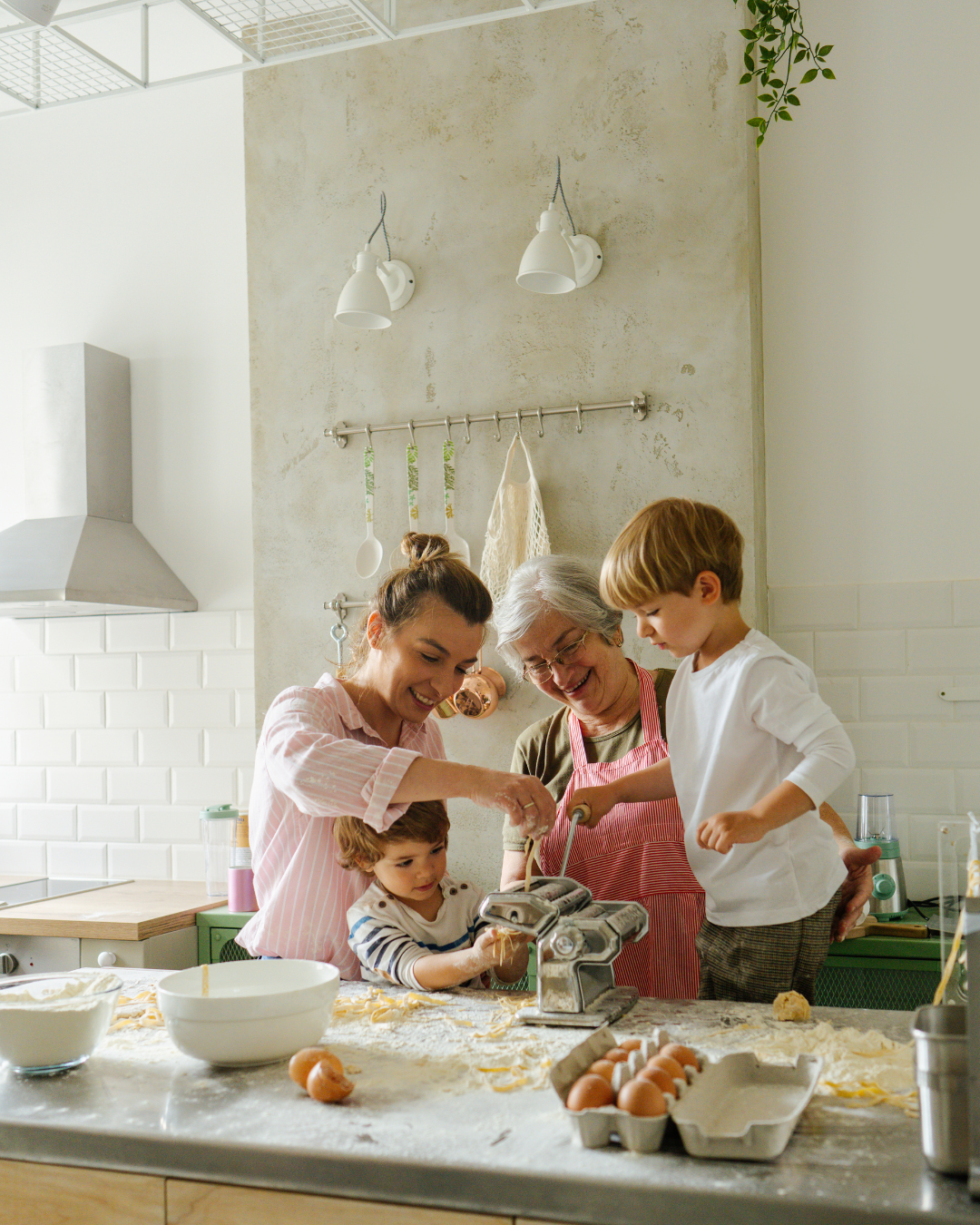
10 Interview Prompts to Capture Your Family Story
Preview
showing
1-6
of
9
Page
1
of
2