In Crow and Weasel, a fable inspired by North American Plains myths, Barry Lopez writes, “The stories people tell have a way of taking care of them ... Sometimes a person needs a story more than food to stay alive.” Maybe this is why Maggid, the storytelling section of the Haggadah, is the heart of the seder. In fact, the Haggadah teaches us, “The more expansive a person is in recounting the story of departing Egypt, the more praiseworthy.” This line invites seder facilitators and guests to weave their own creativity, experiences, and insights into the seder’s storytelling.
Below, you will find four stories by four writers, each representing a different family and a different Jewish experience. In the first, Mishael Zion paints a portrait of the many voices, past and present, that are represented at his family seders. Vlada Nedak describes her introduction to Passover in Ukraine and the importance of translating the Haggadah into Ukrainian. Tamar Elad-Appelbaum expresses the importance of asking questions and the need for collective liberation. Finally, Ziva (Tezezew) Mekonen Degu recounts her family’s annual retelling of their own exodus, from Ethiopia to Israel. As you read these excerpts, we invite you to consider your own family’s history and how telling that story has changed over time and been integrated into different contexts.
Adapting the Story in Every Generation
Preview
More
The Wicked Child is All of Us
Donniel Hartman
This section of the Haggadah aims to remind parents that our children are not all the same, and, as we tell our story, we must adapt it to their different sensibilities and abilities. However, the section which purports to heighten parental sensitivity fails drastically, first by designating one child—the one who asks, “What is this worship to you?”—as “wicked,” and then the response it suggests, to “set that child’s teeth on edge.” We can see it as a valuable pedagogical model of what not to do. We also should remember that at the time the Haggadah was first composed, rude questions were threatening and individuals whose loyalty wasn’t guaranteed were a source of fear. If we bring the “wicked” child into our own moment, we can see that their question is a demand for a compelling reason to choose Judaism.
In the modern world, we are blessed with multiple identities that all lay claim to our loyalty. Being Jewish is one of many identities available to us. Today, each one of us is the “wicked child.” If Judaism is to claim our loyalty, it will be because
we actively choose it over or alongside others. And we will only choose to do so if the Jewish story welcomes our difficult questions and embraces our differences, and if it is morally, intellectually, culturally, and spiritually compelling. Only then will we, the "wicked ones," choose Judaism as our home.
A Rasha (Wicked Child) Roundtable
Preview
More
Avraham Shlonsky (Translated by Mishael Zion)
By my eyes that witnessed the slaughter
By my heart that was weighed down by cries for justice
By my compassion that taught me to pardon
Until the days came that were too terrible to forgive,
I have sworn: To remember it all,
To remember—to forget nothing!
Forget not one thing to the last generation
Until my indignation shall be extinguished
When the staff of my moral rebuke has struck until exhausted.
A vow: Lest for nothing shall the night of terror have passed. A vow: Lest for nothing shall I return to my wont
Without having learned anything, even this time.
Questions for Conversation
• Why do you think the members of Kibbutz Nahal Oz included “A Vow” in their Haggadah next to “Pour Out Your Wrath”? How do the two pieces inform one another?
• What is your relationship to the anger in the poem and in “Pour Out Your Wrath”? Is it different this year than in previous years?
Oded Mazor
Translated by Ayelet Cohen and adapted by Noam Zion)
Oded Mazor recited this prayer at a demonstration for the release of captives in Jerusaelm in 2023.
"For everything there is a season ... under Heaven....
A time for weeping and a time for laughing,
A time for mourning and a time for dancing ...
A time for war and a time for peace. " (Ecclesiastes 3: 1,4,8) In those days when each time collapses into the next
We have no choice but to cry and to laugh with the same eyes
To mourn and to dance at the same time
And the long arc of history is compressed into one day and one hour.
We ask for the strength to contain
The intensity of our bursting hearts,
To rejoice with those who are fortunate to embrace today,
To enfold all of those withdrawing into their longing, their souls trembling, To hold onto hope without letting go,
And to leave some quiet space for a silent scream.
Please, grant us the room to shatter into pieces,
And the spirit to be rebuilt anew.
Questions for Conversation
• In this poetic prayer, Oded Mazor reminds us that life is not quite as simple as Ecclesiastes describes. Instead, we often feel many emotions at once. What gives you strength in those moments?
• Here, Oded describes a quiet space for a silent scream. How do you release your built up emotions?
To Hold Onto Hope Without Letting Go
Preview
More
We begin the seder by reciting Kiddush, the blessing over wine, marking the moment and the meal as a sacred occasion. In
a symbolic nod to our freedom, many have a custom to pour wine or grape juice for the person next to them, but not for themselves. This year, when so many in Israel are not able to sit at seder tables because they are hostages, serving in the IDF, or displaced from their homes, this ritual of pouring a glass for others takes on even greater significance.
To begin your seder, we invite you to read the following piece, written by Avner Goren for the Kibbutz Nir Oz 1996 Haggadah, which was later republished in the Be'eri Kibbutz Haggadah in 1999. Avner, a child of Kibbutz Nir Oz founders, and his wife, Maya, were murdered in their home when Nir Oz was attacked on October 7. Their adult children, Gal, Asif, Bar, and Dekel, survived, and they are moved by the inclusion of their father’s voice in this Haggadah supplement. In this poem, Avner asks the reader to raise a glass. As we read Avner’s poem and raise our glasses to begin the seder, we hold in our hearts those who cannot be at seders this year and think about ways we can elevate their voices.
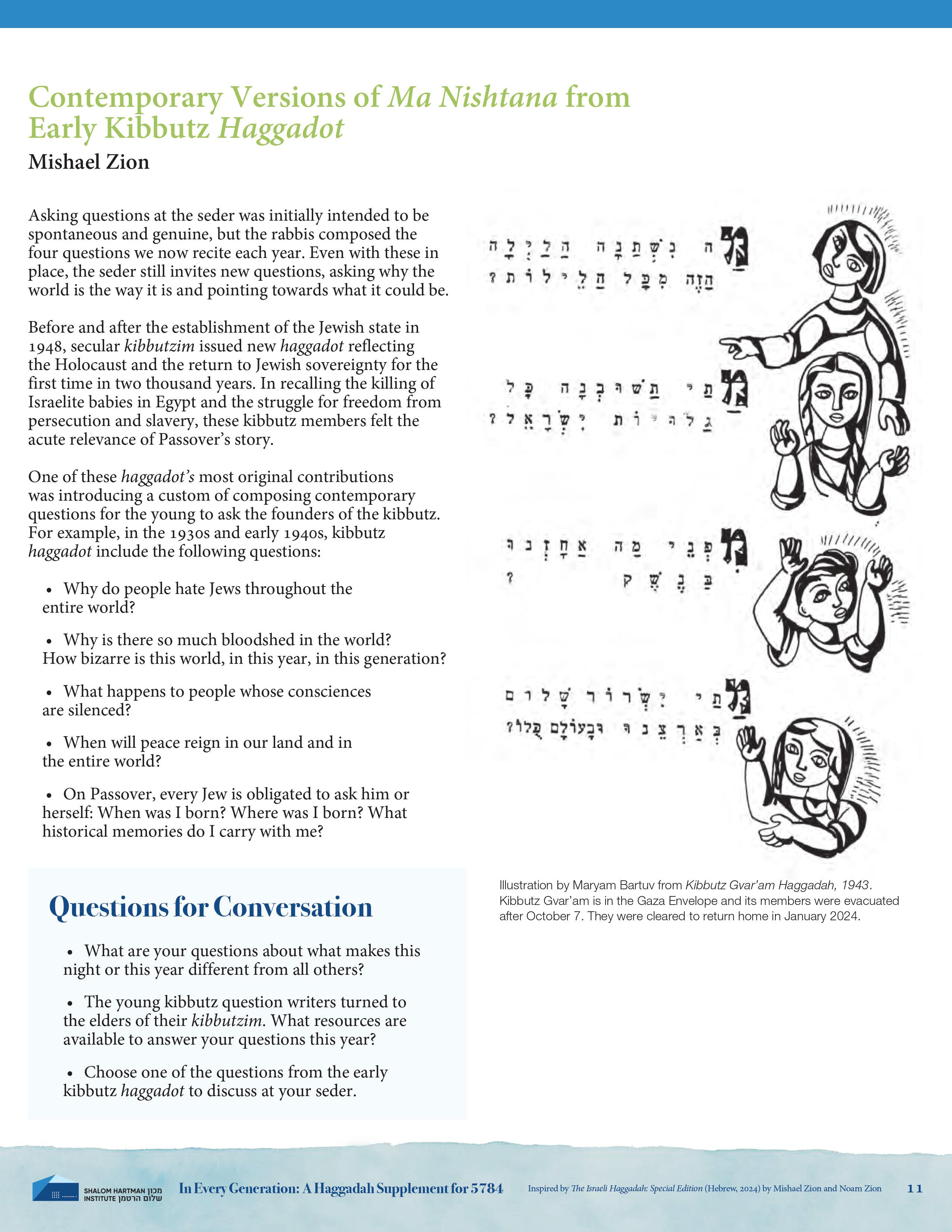
In Every Generation: Versions of Ma Nishtana from early Kibbutz Haggadot
Preview
More
In Crow and Weasel, a fable inspired by North American Plains myths, Barry Lopez writes, “The stories people tell have a way of taking care of them ... Sometimes a person needs a story more than food to stay alive.” Maybe this is why Maggid, the storytelling section of the Haggadah, is the heart of the seder. In fact, the Haggadah teaches us, “The more expansive a person is in recounting the story of departing Egypt, the more praiseworthy.” This line invites seder facilitators and guests to weave their own creativity, experiences, and insights into the seder’s storytelling.
Below, you will find four stories by four writers, each representing a different family and a different Jewish experience. In the first, Mishael Zion paints a portrait of the many voices, past and present, that are represented at his family seders. Vlada Nedak describes her introduction to Passover in Ukraine and the importance of translating the Haggadah into Ukrainian. Tamar Elad-Appelbaum expresses the importance of asking questions and the need for collective liberation. Finally, Ziva (Tezezew) Mekonen Degu recounts her family’s annual retelling of their own exodus, from Ethiopia to Israel. As you read these excerpts, we invite you to consider your own family’s history and how telling that story has changed over time and been integrated into different contexts.
Adapting the Story in Every Generation
Preview
More
The Wicked Child is All of Us
Donniel Hartman
This section of the Haggadah aims to remind parents that our children are not all the same, and, as we tell our story, we must adapt it to their different sensibilities and abilities. However, the section which purports to heighten parental sensitivity fails drastically, first by designating one child—the one who asks, “What is this worship to you?”—as “wicked,” and then the response it suggests, to “set that child’s teeth on edge.” We can see it as a valuable pedagogical model of what not to do. We also should remember that at the time the Haggadah was first composed, rude questions were threatening and individuals whose loyalty wasn’t guaranteed were a source of fear. If we bring the “wicked” child into our own moment, we can see that their question is a demand for a compelling reason to choose Judaism.
In the modern world, we are blessed with multiple identities that all lay claim to our loyalty. Being Jewish is one of many identities available to us. Today, each one of us is the “wicked child.” If Judaism is to claim our loyalty, it will be because
we actively choose it over or alongside others. And we will only choose to do so if the Jewish story welcomes our difficult questions and embraces our differences, and if it is morally, intellectually, culturally, and spiritually compelling. Only then will we, the "wicked ones," choose Judaism as our home.
A Rasha (Wicked Child) Roundtable
Preview
More
Avraham Shlonsky (Translated by Mishael Zion)
By my eyes that witnessed the slaughter
By my heart that was weighed down by cries for justice
By my compassion that taught me to pardon
Until the days came that were too terrible to forgive,
I have sworn: To remember it all,
To remember—to forget nothing!
Forget not one thing to the last generation
Until my indignation shall be extinguished
When the staff of my moral rebuke has struck until exhausted.
A vow: Lest for nothing shall the night of terror have passed. A vow: Lest for nothing shall I return to my wont
Without having learned anything, even this time.
Questions for Conversation
• Why do you think the members of Kibbutz Nahal Oz included “A Vow” in their Haggadah next to “Pour Out Your Wrath”? How do the two pieces inform one another?
• What is your relationship to the anger in the poem and in “Pour Out Your Wrath”? Is it different this year than in previous years?
Oded Mazor
Translated by Ayelet Cohen and adapted by Noam Zion)
Oded Mazor recited this prayer at a demonstration for the release of captives in Jerusaelm in 2023.
"For everything there is a season ... under Heaven....
A time for weeping and a time for laughing,
A time for mourning and a time for dancing ...
A time for war and a time for peace. " (Ecclesiastes 3: 1,4,8) In those days when each time collapses into the next
We have no choice but to cry and to laugh with the same eyes
To mourn and to dance at the same time
And the long arc of history is compressed into one day and one hour.
We ask for the strength to contain
The intensity of our bursting hearts,
To rejoice with those who are fortunate to embrace today,
To enfold all of those withdrawing into their longing, their souls trembling, To hold onto hope without letting go,
And to leave some quiet space for a silent scream.
Please, grant us the room to shatter into pieces,
And the spirit to be rebuilt anew.
Questions for Conversation
• In this poetic prayer, Oded Mazor reminds us that life is not quite as simple as Ecclesiastes describes. Instead, we often feel many emotions at once. What gives you strength in those moments?
• Here, Oded describes a quiet space for a silent scream. How do you release your built up emotions?
To Hold Onto Hope Without Letting Go
Preview
More
We begin the seder by reciting Kiddush, the blessing over wine, marking the moment and the meal as a sacred occasion. In
a symbolic nod to our freedom, many have a custom to pour wine or grape juice for the person next to them, but not for themselves. This year, when so many in Israel are not able to sit at seder tables because they are hostages, serving in the IDF, or displaced from their homes, this ritual of pouring a glass for others takes on even greater significance.
To begin your seder, we invite you to read the following piece, written by Avner Goren for the Kibbutz Nir Oz 1996 Haggadah, which was later republished in the Be'eri Kibbutz Haggadah in 1999. Avner, a child of Kibbutz Nir Oz founders, and his wife, Maya, were murdered in their home when Nir Oz was attacked on October 7. Their adult children, Gal, Asif, Bar, and Dekel, survived, and they are moved by the inclusion of their father’s voice in this Haggadah supplement. In this poem, Avner asks the reader to raise a glass. As we read Avner’s poem and raise our glasses to begin the seder, we hold in our hearts those who cannot be at seders this year and think about ways we can elevate their voices.
In Every Generation: Versions of Ma Nishtana from early Kibbutz Haggadot
Preview
More
showing
1-6
of
66
Page
1
of
11
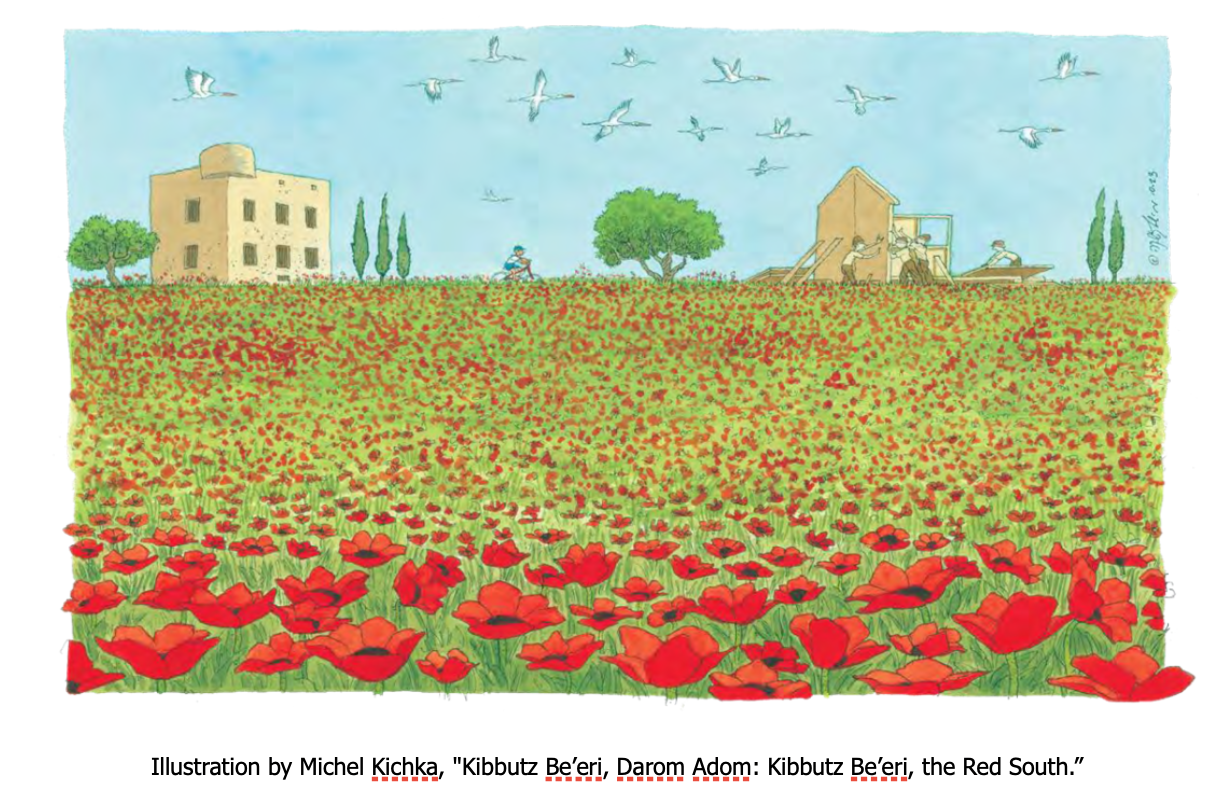
In Every Generation: A Haggadah Supplement for 5784
Preview
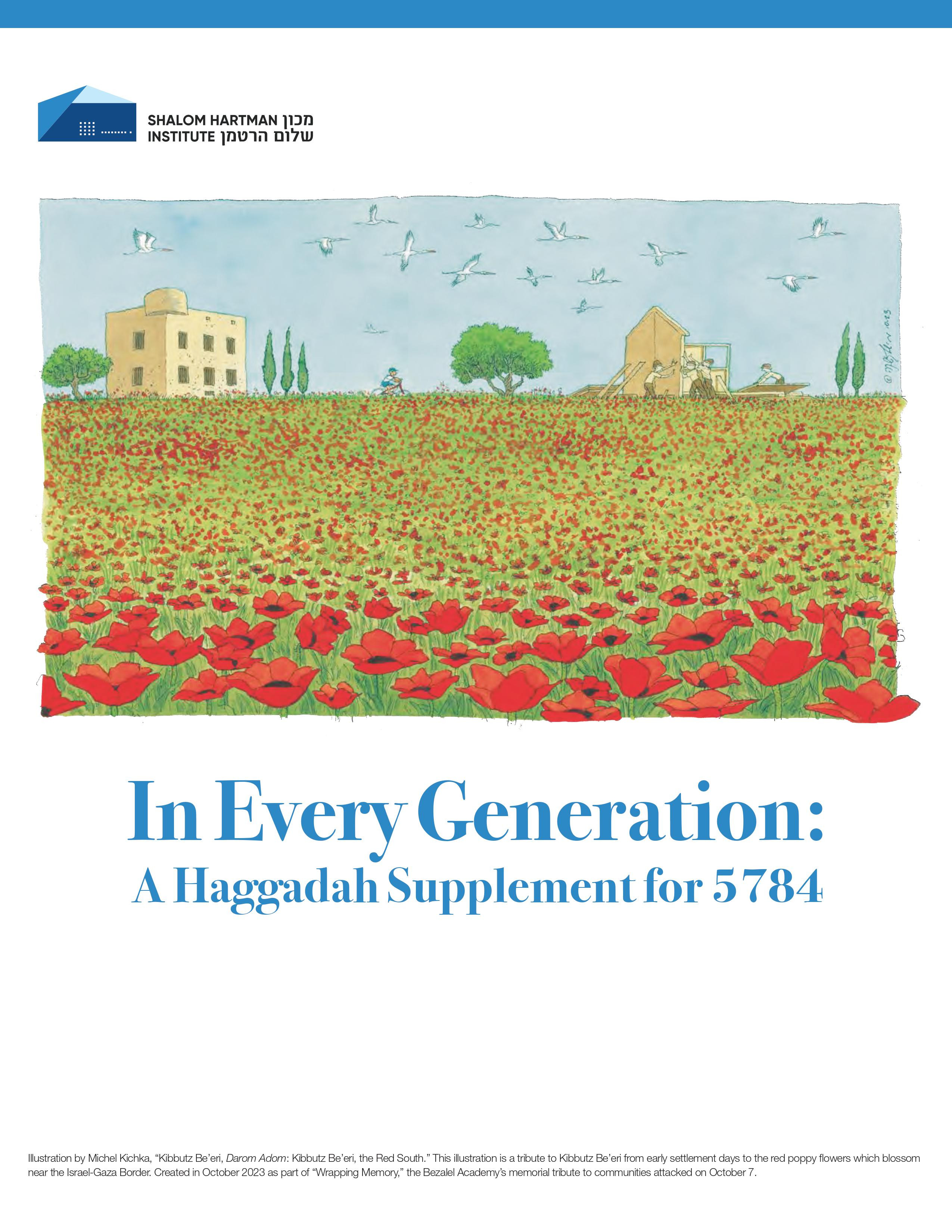
In Every Generation: A Haggadah Supplement for 5784
Preview