Mix-and-match
Explore content in our extensive library and pull it together into your own Jewish ritual booklet that honors and recognizes whatever life has brought your way.
Share a ritual
Add your own original content as a clip to our extensive library - a poem, blessing, or something else entirely. Someone out there is looking for exactly what only you can create.
Support us
with your donation.
Help us build moments of meaning and connection through home-based Jewish rituals.
Featured clips
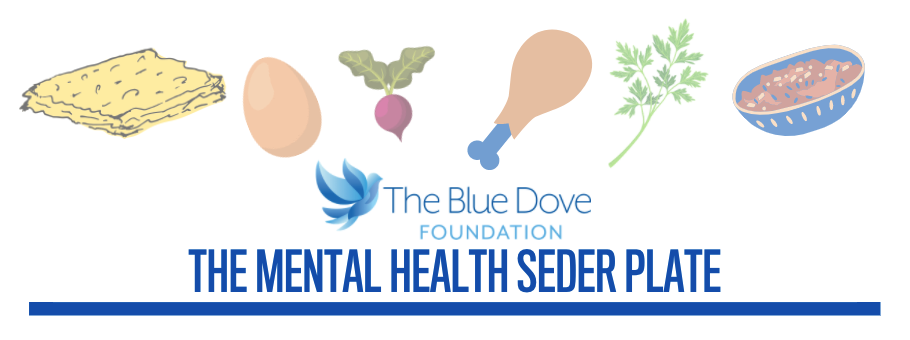
Mental Health Interpretations of the Seder Plate
Preview
More
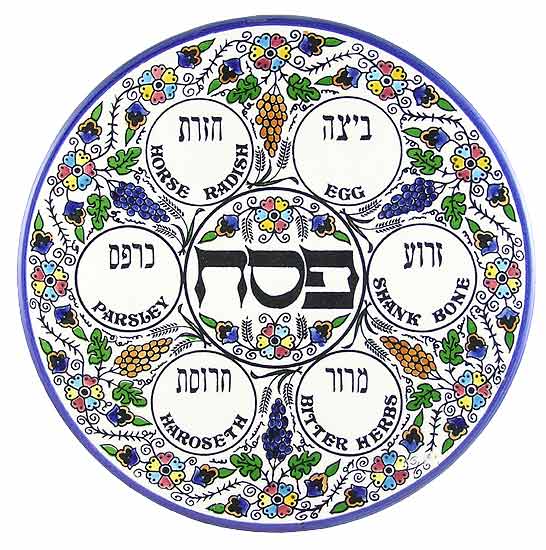
Seder Plate Symbols
Preview
More
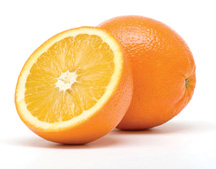
To Consider- The Origin of the Orange on the Seder Plate
Preview
More
In the early 1980s, while speaking at Oberlin College Hillel (the campus Jewish organization), Susannah Heschel, a well-known Jewish feminist scholar (and daughter of Rabbi Abraham Joshua Heschel), was introduced to an early feminist Haggadah that suggested adding a crust of bread on the seder plate, as a sign of solidarity with Jewish lesbians (which was intended to convey the idea that there’s as much room for a lesbian in Judaism as there is for a crust of bread on the seder plate).
Heschel felt that to put bread on the seder plate would be to accept that Jewish lesbians and gay men violate Judaism like chumetz [leavened food] violates Passover.
So at her next seder, she chose an orange as a symbol of inclusion of gays and lesbians and others who are marginalized within the Jewish community. She offered the orange as a symbol of the fruitfulness for all Jews when lesbians and gay men are contributing and active members of Jewish life.
In addition, each orange segment had a few seeds that had to be spit out — a gesture of spitting out, repudiating the homophobia of Judaism. While lecturing, Heschel often mentioned her custom as one of many feminist rituals that have been developed in the last 20 years.
Heschel herself wrote:
Somehow, though, the typical patriarchal maneuver occurred: My idea of an orange and my intention of affirming lesbians and gay men were transformed. Now the story circulates that a man said to me that a woman belongs on the bimah [podium of a synagogue] as an orange on the seder plate. A woman’s words are attributed to a man, and the affirmation of lesbians and gay men is erased. Isn’t that precisely what’s happened over the centuries to women’s ideas?
Orange on the Seder Plate
Preview
More
The world was awakened and shattered by the images of a little boy whose body lay lifeless amidst the gentle surf of a Turkish beach this past summer. Another nameless victim amongst thousands in the Syrian Refugee Crisis, the greatest refugee crisis since WWII. But this little boy, like every little boy ,had a name. His name was Aylan Kurdi (age 3), he drowned along with his older brother, Galip (age 5), and their mother, Rihan, on their own exodus to freedom’s distant shore.
Aylan and Galip’s father, Abdullah, survived the harrowing journey – though how does a parent survive the death of their children? In teaching the world about his sons, he shared that they both loved bananas, a luxury in their native war-torn Syria. Every day after work, Abdullah, like mothers and fathers everywhere, would bring home a banana for his sons to share, a sweet little treat, a sign of his enduring love for them.
Tonight we place a banana on our seder table and tell this story to remind us of Aylan, Galip and children everywhere who are caught up in this modern day exodus. May they be guarded and protected along their journey to safety, shielded by the love of their parents, watched over by God full of mercy and compassion.
Rabbi Dan Moskovitz, Temple Sholom Vancouver, British Columbia
For more information on the refugee crisis, please visit rac.org/refugees. For all Religious Action Center of Reform Judaism resources, please visit rac.org/Passover.
The Banana on the Seder Plate: A Ritual to Reflect the Refugee Crisis
Preview
More
showing
1-6
of
30
Page
1
of
5
Featured ritual books

showing
1-6
of
9
Page
1
of
2