Download these simple guides for Rosh Hashanah, Yom Kippur, Sukkot, and more to celebrate the Jewish High Holidays at home, or mix and match from a variety of rituals and blessings to create your own meaningful holiday.
What Are The Jewish High Holidays?
The High Holidays, or High Holy Days, refers to an important period of Jewish holidays that arrive each fall to honor renewal, freedom, and forgiveness. The most popular holidays that occur during this period are Rosh Hashanah and Yom Kippur, but there are other holidays within this time period as well.
This year, Rosh Hashanah begins the evening of Friday, September 11, 2026 and ends the evening of Sunday, September 13, 2026. Rosh Hashanah literally means the “head of the year,” and is often referred to as the Jewish New Year. It’s customary to celebrate by having a special dinner and eating sweet foods, like apples dipped in honey. The traditional greeting on Rosh Hashanah is “shana tovah,” which means “have a good year.
This year, Yom Kippur begins the evening of Sunday, September 20, 2026 and ends the evening of Monday, September 21, 2026. Yom Kippur is arguably the holiest and most solemn day of the year for Jewish people. It is when Jews around the world ask for forgiveness for all of the things they have done wrong in the past year. It is customary to fast and refrain from food and water. There are a few appropriate greetings on Yom Kippur. You can say “have a meaningful holiday,” or “good yom tov,” which means “have a good holy day.” If someone is fasting, you can say “have a good fast” or “have an easy fast.”
Sukkot (known to some as the Feast of the Tabernacles) is a time to remember our wandering in the desert after escaping slavery in Egypt and reconnect with our agricultural roots. To celebrate, Jews construct a temporary outdoor dwelling called a Sukkah. The holiday is celebrated for seven days, and many Jews observe it by eating, drinking, relaxing, and even sleeping in their Sukkah. We also shake the branches of the lulav and an etrog fruit around our bodies to gather in the Divine. Sukkot begins the evening of Friday, September 25, 2026 and ends the evening of Friday, October 2, 2026.
Simchat Torah marks the day when we finish reading the Torah, and celebrate before we start all over again. It's a fun, happy holiday where we dance and parade around with the Torah. Celebrations typically take place at a synagogue, but there are also many ways to celebrate the joy of receiving the Torah at home as well!
Mix-and-match
Explore content in our extensive library and pull it together into your own Jewish ritual booklet that honors and recognizes whatever life has brought your way.
Share a ritual
Add your own original content as a clip to our extensive library - a poem, blessing, or something else entirely. Someone out there is looking for exactly what only you can create.
Support us
with your donation.
Help us build moments of meaning and connection through home-based Jewish rituals.
Featured ritual books
Episode 3 Guidebook: Striving for Light
Preview
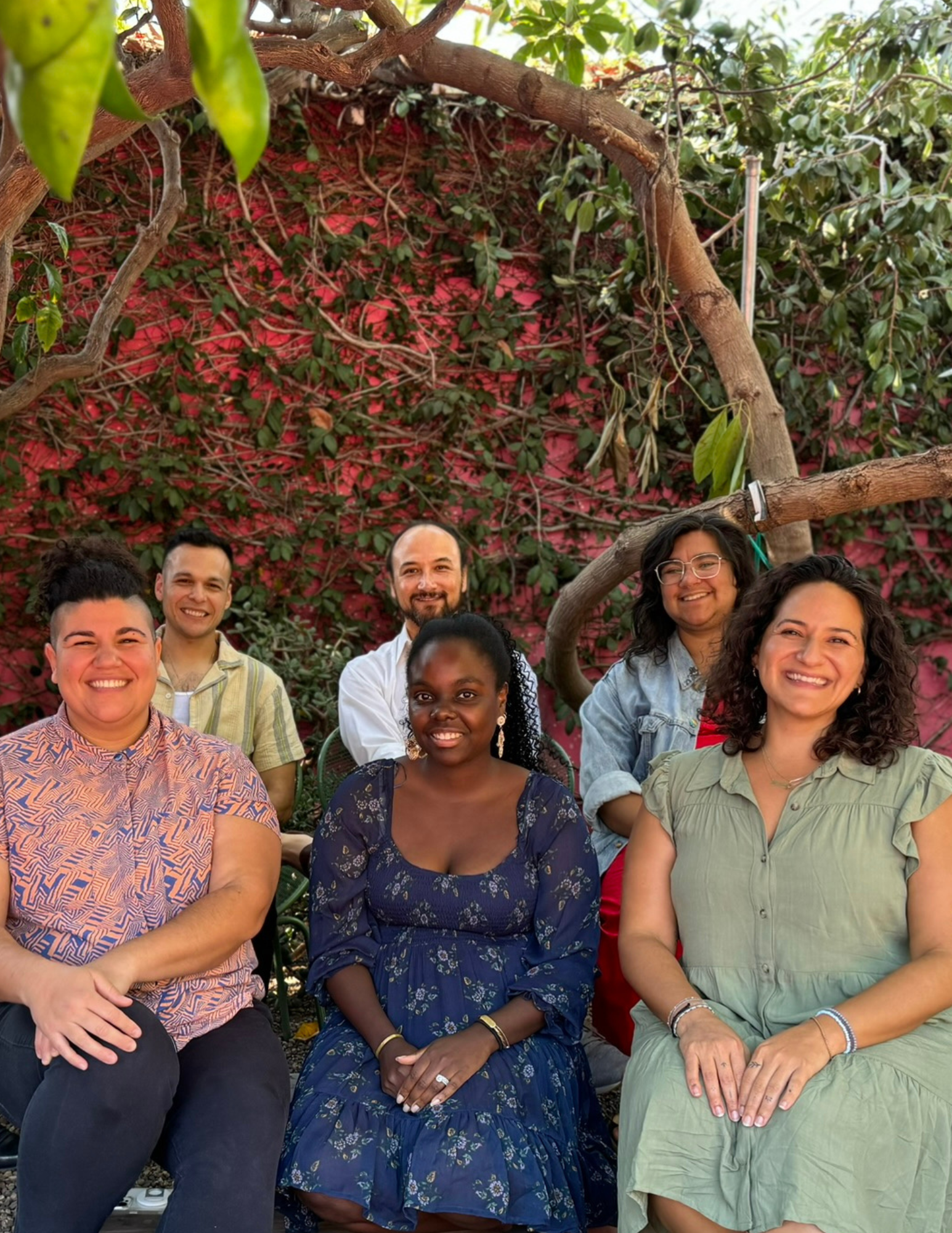
The Beauty of Beginnings: A Book of Radical Rituals for the High Holidays
Preview

Gratitude Reflections
Preview
showing
1-6
of
894
Page
1
of
149
Featured clips
By David Seidenberg
With my vote today I am prepared and intending to seek peace for this country, as it is written:
“Seek out the peace of the city where I cause you to roam and pray for her sake to God, for in her peace you all will have peace.”
May it be Your will that votes will be counted faithfully and may You account my vote as if I had fulfilled this verse with all my power.
May it be good in Your eyes to give a wise heart to whomever we elect today and may You raise for us a government whose rule is for good and blessing to bring justice and peace to all the inhabitants of the world and to Jerusalem, for rulership is Yours!
Just as I participated in elections today so may I merit to do good deeds and repair the world with all my actions, and with the act of [fill in your pledge] which I pledge to do today on behalf of all living creatures and in remembrance of the covenant of Noah’s waters to protect and to not destroy the earth and her plenitude.
May You give to all the peoples of this country, the strength and will to pursue righteousness and to seek peace as unified force in order to cause to flourish, throughout the world, good life and peace and may You fulfill for us the verse:
“May the pleasure of Adonai our God be upon us, and establish the work of our hands for us, may the work of our hands endure.”
Contributed by Hebrew Helpers
If there is to be peace in the world,
There must be peace in the nations.
If there is to be peace in the nations,
There must be peace in the cities.
If there is to be peace in the cities,
There must be peace between neighbors.
If there is to be peace between neighbors,
There must be peace in the home.
If there is to be peace in the home,
There must be peace in the heart.
- Lao-Tse
By Trisha Arlin
May you contribute all that you can contribute and not punish yourself for what you couldn’t do.
May the good people win and the bad people lose.
May you not eat or drink too much crap while you wait for results.
If the good people lose and the bad people win, may you survive to fight another day.
May you have a good wifi connection so that you may be able to watch as many kitten and puppy videos as you need to so that you can stay calm.
May you have friends to celebrate and commiserate with.
May you get a good night’s sleep.
May the line to vote on Tuesday be long and filled with first time voters.
And may we emerge from it all with hope.
And let us say, Amen
Blessings for The Night Before The Election
Preview
More
By Truah: A Rabbinic Call to Action
May it be Your will, at this season of our election, to guide us towards peace.
By voting, we commit to being full members of society, to accepting our individual responsibility for the good of the whole. May we place over ourselves officials in all our gates…who will judge the people with righteousness (Deut 16:18), and may we all merit to be counted among those who work faithfully for the public good.
Open our eyes to see the image of God in all candidates and elected officials, and may they see the image of God in all citizens of the earth.
Grant us the courage to fulfill the mitzvah of loving our neighbors as ourselves, and place in our hearts the wisdom to understand those who do not share our views.
As we pray on the High Holidays, “May we become a united society, fulfilling the divine purpose with a whole heart.”
And as the Psalmist sang, “May there be shalom within your walls, peace in your strongholds. For the sake of my brothers and sisters and friends, I will speak peace to you.” (Ps. 122:7-8)
When the world is upside down,
I/Me/Us/We must flip the script:
Grab hold of the narrative,
revolt against the same old story,
resist the riptide of history
despite grim odds,
the plot twist brought
to untwist this plot.
Thus begins every
inner rebellion.
I/Me/Us/We enter
the cold wetness
of the cave
made of echo-stone
to retrieve the oil
hidden in secret
and Maccabean shadow-folds
for generations.
When the world is upside down,
I/Me/Us/We must flip the script:
Watch the exalted letters
dance into all possible combinations,
account for every permutation,
precisely as numerous
as each luminous star
in the numinous field
of our milky and honeyed galaxy.
I/Me/Us/We reclaim our sovereignty
over the landscape
of our heavenly body,
shore up our borders,
draw constellations as boundaries,
rededicate the sacred space
in the center of us,
sanctify the nourishment
of moon and sun.
Let us rise elemental,
offer our/self as vessel,
four mothers to the left,
four angels to the right,
we long to be anointed, filled with
hyssop and frankincense,
spikenard and myrrh,
balsam and cassia,
jasmine and rose,
holy olive.
Pour in the gloaming
moment of every tiny brave blaze
thrown in stark relief
against the gift
of mysterious darkness.
Hanukkah: Illumined Nation/The Rededication Of Space
Preview
More
showing
1-6
of
10684
Page
1
of
1781