Mix-and-match
Explore content in our extensive library and pull it together into your own Jewish ritual booklet that honors and recognizes whatever life has brought your way.
Share a ritual
Add your own original content as a clip to our extensive library - a poem, blessing, or something else entirely. Someone out there is looking for exactly what only you can create.
Support us
with your donation.
Help us build moments of meaning and connection through home-based Jewish rituals.
Featured ritual books

showing
1-6
of
9
Page
1
of
2
Featured clips
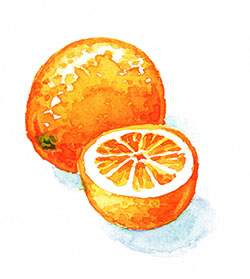
Dispelling the Urban Myth of the Orange on the Seder Plate
Preview
More
In the early 1980s, the Hillel Foundation invited me to speak on a panel at Oberlin College. While on campus, I came across a Haggadah that had been written by some Oberlin students to express feminist concerns. One ritual they devised was placing a crust of bread on the Seder plate, as a sign of solidarity with Jewish lesbians, a statement of defiance against a rebbetzin’s pronouncement that, “There’s as much room for a lesbian in Judaism as there is for a crust of bread on the seder plate.”
At the next Passover, I placed an orange on our family's Seder plate. During the first part of the Seder, I asked everyone to take a segment of the orange, make the blessing over fruit, and eat it as a gesture of solidarity with Jewish lesbians and gay men, and others who are marginalized within the Jewish community.
Bread on the Seder plate brings an end to Pesach-- it renders everything chametz. And it suggests that being lesbian is being transgressive, violating Judaism. I felt that an orange was suggestive of something else: the fruitfulness for all Jews when lesbians and gay men are contributing and active members of Jewish life. In addition, each orange segment had a few seeds that had to be spit out--a gesture of spitting out, repudiating the homophobia of Judaism.
When lecturing, I often mentioned my custom as one of many new feminist rituals that have been developed in the last twenty years. Somehow, though, the typical patriarchal maneuver occurred:
My idea of an orange and my intention of affirming lesbians and gay men were transformed. Now the story circulates that a man said to me that a woman belongs on the bimah as an orange on the Seder plate. A woman's words are attributed to a man, and the affirmation of lesbians and gay men is simply erased.
Isn't that precisely what's happened over the centuries to women's ideas? And isn’t this precisely the erasure of their existence that gay and lesbian Jews continue to endure, to this day?
- Excerpted from an Email from Professor Susannah Heschel
Susannah Heschel Explains the Orange
Preview
More
The Passover Symbols
We have now told the story of Passover… but wait! We’re not quite done. There are still some symbols on our seder plate we haven’t talked about yet. Rabban Gamliel would say that whoever didn’t explain the shank bone, matzah, and marror (or bitter herbs) hasn’t done Passover justice.
The shank bone represents the Pesach, the special lamb sacrifice made in the days of the Temple for the Passover holiday. It is called the pesach, from the Hebrew word meaning “to pass over,” because God passed over the houses of our ancestors in Egypt when visiting plagues upon our oppressors.
The matzah reminds us that when our ancestors were finally free to leave Egypt, there was no time to pack or prepare. Our ancestors grabbed whatever dough was made and set out on their journey, letting their dough bake into matzah as they fled.
The bitter herbs provide a visceral reminder of the bitterness of slavery, the life of hard labor our ancestors experienced in Egypt.
The Orange
Even after one has encountered the collection of seemingly unconnected foods on the seder plate year after year, it’s fun to ask what it’s all about. Since each item is supposed to spur discussion, it makes sense that adding something new has been one way to introduce contemporary issues to a seder.
So how was it that the orange found its place on the seder plate as a Passover symbol of feminism and women’s rights?
The most familiar version of the story features Susannah Heschel, daughter of Abraham Joshua Heschel and scholar in her own right, giving a speech about the ordination of women clergy. From the audience, a man declared, “A woman belongs on the bima like an orange belongs on the seder plate!” However, Heschel herself tells a different story.
During a visit to Oberlin College in the early 1980s, she read a feminist Haggadah that called for placing a piece of bread on the seder plate as a symbol of the need to include gays and lesbians in Jewish life. Heschel liked the idea of putting something new on the seder plate to represent suppressed voices, but she was uncomfortable with using chametz, which she felt would invalidate the very ritual it was meant to enhance. She chose instead to add an orange and to interpret it as a symbol of all marginalized populations.
Miriam’s Cup
A decade later, the ritual of Miriam’s Cup emerged as another way to honor women during the seder. Miriam’s Cup builds upon the message of the orange, transforming the seder into an empowering and inclusive experience.
Although Miriam, a prophet and the sister of Moses, is never mentioned in the traditional Haggadah text, she is one of the central figures in the Exodus story.
According to Jewish feminist writer Tamara Cohen, the practice of filling a goblet with water to symbolize Miriam’s inclusion in the seder originated at a Rosh Chodesh group in Boston in 1989. The idea resonated with many people and quickly spread.
Miriam has long been associated with water. The rabbis attribute to Miriam the well that traveled with the Israelites throughout their wandering in the desert. In the Book of Numbers, the well dries up immediately following Miriam’s death. Of course, water played a role in Miriam’s life from the first time we meet her, watching over the infant Moses on the Nile, through her triumphant crossing of the Red Sea.
There is no agreed-upon ritual for incorporating Miriam’s Cup into the seder, but there are three moments in the seder that work particularly well with Miriam’s story.
1) As Moses’s sister, Miriam protected him as an infant and made sure he was safely received by Pharaoh’s daughter. Some seders highlight this moment by invoking her name at the start of the Maggid section when we begin telling the Passover story.
2) Other seders, such as this one, incorporate Miriam’s cup when we sing songs of praise during the Maggid and later during the Hallel as a reminder that Miriam led the Israelites in song and dance during the Exodus.
3) Still others place Miriam’s Cup alongside the cup we put out for Elijah.
Just as there is no set time in the seder to use Miriam’s Cup, there is no set ritual or liturgy either. Some fill the cup with water at the start of the seder; others fill the cup during the seder. Some sing Debbie Friedman’s “Miriam’s Song”; others sing “Miriam Ha-Neviah.” As with all seder symbols, Miriam’s Cup is most effective when it inspires discussion.
What does Miriam mean to you? How do all of her roles, as sister, protector, prophet, leader, singer, and dancer, contribute to our understanding of the Exodus story? Who are the Miriams of today?
The Passover Symbols, The Orange & Miriam's Cup
Preview
More
HaCarah – The conscious recognition of those not completely seen
Tapuz v’Ko’kos – The Orange and Coconut
Why do we have an orange and a coconut on the Seder Plate?
Speaker 1: In our own day as in the ancient days of our tradition, an event becomes a story, a story is woven with new legends, and the legends lead the path into new teachings. So it is with the orange on the Seder plate.
Speaker 2: To begin with in the early 1980’s, while speaking at Oberlin College Hillel, Susannah Heschel was introduced to an early feminist Haggadah that suggested adding a crust of bread on the Seder plate, as a sign of solidarity with Jewish lesbians (there's as much room for a lesbian in Judaism as there is for a crust of bread on the Seder plate). Heschel felt that to put bread on the Seder plate would be to accept that Jewish lesbians and gay men violate Judaism like chametz violates Passover. So, at her next Seder, she chose an orange as a symbol of inclusion of gays and lesbians and others who are marginalized within the Jewish community.
Speaker 3: Heschel offered the orange as a symbol of the fruitfulness for all Jews representing lesbians and gay men and their contributions as active members in Jewish life. In addition, each orange segment had a few seeds that had to be spit out – a gesture of spitting out, repudiating the homophobia of Judaism.
Speaker 4: While lecturing, Heschel often mentioned her custom as one of many feminist rituals that have been developed in the last twenty years. She writes, "Somehow, though, the typical patriarchal maneuver occurred: my idea of an orange and my intention of affirming lesbians and gay men were transformed. Now the story circulates that a MAN said to me that a woman belongs on the bimah as an orange on the Seder plate. A woman's words are attributed to a man, and the affirmation of lesbians and gay men is erased. Isn't that precisely what's happened over the centuries to women's ideas?"
Speaker 5: We place an orange on our Seder plate to symbolize the affirmation of lesbians and gay men, and to ensure we continue to cherish that growth of Judaism. Tonight all the excluded of our people – lesbians, gay men, bisexuals, transgender, women, Jews by choice –and all who have felt left out – take their full and rightful place in shaping the future of our people and traditions by placing the orange on its own Seder plate. Our two Seder plates represent the duality of symbolism as we sit here at our GLBT Passover Seder; the Jewish traditions that we embrace since ancient days and our transformation as GLBT Jews into equal contributors to the growth of our people’s traditions.
Speaker 6: So why an orange? Because the orange carries within itself the seeds of its own rebirth. So have gay men and lesbians, bisexuals, women, Jews by choice within Judaism given birth to their own inclusion.
Speaker 7: Also because an orange provides both food and drink – it alone could sustain life for quite some time. So have queer Jews and others on the outskirts of the tradition had, at times, to sustain themselves until others understood and chose to welcome and include instead of turning away.
Speaker 8: This year we’ll do more than let the orange sit upon the Seder plate as a silent symbol, unconsumed. Tonight we will say the blessing and taste the sweetness of our orange and use it to add flavor to our Charoset to remind us that we are all a part of the mortar that binds our people. Take note how the flavor of our Charoset changes when we are able to taste the sweetness of integration.
Speaker 9: Tonight the orange is joined by the Coconut which represents those who are still locked inside their shell hiding from the world their inner beauty as an out and proud GLBT Jew. We notice that the shell is nearly impossible to crack with our bare hands and equally difficult for the beauty inside to escape on its own.
Pass Coconut around the table
Speaker 10: We all know from experience that once a coconut is opened up the richness of its inner essence pours out almost with excitement of its long awaited liberation. Tonight we hold up our coconut and recognize the struggle of coming out as something most of us have experienced personally. I ask; should anyone like to try to open this coconut with their bare hands, do so now!
Speaker 10 continues: Otherwise we wait patiently for those who struggle silently within their shells to join us here, hopefully next year to celebrate our GLBT experience as free and out people.
Peel orange and break into sliced segments to distribute
For both the orange and the coconut, we make a conscious decision to recognize those who have not fully been seen by everyone in our society. We take a piece of orange and imagine a piece of coconut and recite:
בָּרוּךְ אַתָּה יי אֱלֹהֵינוּ מֶלֶךְ הָעוֹלָם בּוֹרֵא פְּרִי הַעֵץ
Baruch Atah Adonai, Eloheynu Melech Ha’Olam, bo’ray p’ree ha’etz
Blessed are You, Lord our God, Ruler of the universe, who creates the fruit of the tree.
Chamutz - Eating of the Sour Foods
Traditionally on Passover, all liquids which contain ingredients or flavors made from grain alcohol or vinegar (other than cider vinegar) are prohibited. Consequently, pickled foods are uncommon and undesirable for those observing the dietary guidelines of Passover. Equally undesirable in our world is the sour flavor of hatred, bigotry and homophobia. We take our sliced cucumber piece soaked in cider vinegar and lemon juice and recite:
בָּרוּךְ אַתָּה יי אֱלֹהֵינוּ מֶלֶךְ הָעוֹלָם, בּוֹרֵא פְּרִי הָאֲדָמָה
Baruch Atah Adonai, Eloheynu Melech Ha’Olam, bo’ray p’ree ha’adamah.
Blessed are You, Lord our God, Ruler of the universe, who creates the fruit of the earth.
Fruit Salad
In recognition of our collective potential, when we all work together, able to recognize each others’ identities, we hold the fruit salad and inspect its components. Each piece of fruit is different from the other and regardless of which fruit it is, together the diversity of textures and flavors work together to make a collective entity that is greater than anyone piece. In an ideal world all people will be included in society as equal players able to contribute to society making it greater than before and able to give and receive freely as equal participants in our society.
HaDerekh - The Path
The path that brought us to who we are today is full of flowers we can see and smell. The flowers here on our Seder plate represent the beauty within each of us on this path of life, but we must recognize the sticks and stones that lay on our path to making us who we are today. For the members of our community that have suffered the pain and anguish of physical assault for being different and for those that have suffered verbal abuse and harassment we bow our heads, close ours eyes and reflect on our own experiences and how different our lives might have been had we been in your shoes.
These sticks and stones have affected us and shaped our identities. Today we remember the many crossroads, vistas, cracks and divots along the way.
We take the sticks, stones and flowers and recite:
בָּרוּךְ אַתָּה יי אֱלֹהֵינוּ מֶלֶךְ הָעוֹלָם שֶׁהַכֹּל נִהְיָה בִּדבָרוֹ
Baruch Atah Adonai, Eloheynu Melech Ha’Olam, she-ha-kol ni-h’yeh bid-va-ro.
Blessed are You, Lord our God, Ruler of the universe, by whose word everything comes to be.
GLBT Seder Plate In Depth - The Orange, The Coconut, Sour Foods, Fruit Salad, Flowers, Sticks & Stones
Preview
More
EVERY JEWISH FAMILY produces a unique version of the Passover seder—the big ritual meal of traditional foods, served after and amid liturgy, storytelling, and song. We’re all surprised at each other’s customs: You eat lamb? You don’t sing “Chad Gad Ya”? And yet, virtually every seder does share a few common elements. Matzoh crumbs all over the floor. Wine stains on the tablecloth. A seder plate containing the traditional symbols of the holiday: a roasted shank bone and hardboiled egg, recalling the days of the Temple sacrifices; horseradish and salt water for the bitterness of oppression; parsley for spring; haroset, a mixture of wine, nuts, and fruit symbolizing mortar and the heavy labor performed by the Israelite slaves. And for lots of us, an orange. The ancient Hebrews who fled into the wilderness didn’t know from citrus fruit, and there certainly weren’t any Valencias on Grandma’s seder plate. Starting in the 1980s, the new holiday symbol has been showing up on an ever-increasing number of Passover tables. The custom originated with the teacher and writer Susannah Heschel, who first set it out as a symbol of inclusion for lesbian and gay Jews, and in following years for all those who have been marginalized in the Jewish community. Thanks largely to the Internet, Jewish women adopted the fruit as a symbol of their inclusion, and now there are oranges on seder plates all over the world, as well as alternative stories about how they got there in the first place. Regardless of its genesis, that orange now makes several subtle spiritual and political statements. For one thing, it represents the creative piety of liberal Jews, who honor tradition by adding new elements to the old. The orange also announces that those on the margins have fully arrived as coauthors of Jewish history, as does the presence of another new ritual item, the Miriam’s Cup, which acknowledges the role of Moses’ sister, the singer-songwriter-prophet, in the story. The orange is a living part of the ancient pedagogic strategy of Passover. We are commanded to teach our children about the Exodus from Egypt in a manner so vivid that everyone at the table—but especially the kids—remembers (not merely imagines but actually remembers) what it feels like to be a hungry, hunted slave. The seder makes memory manifest, tangible, and solid as Grandpa’s kiddush cup. Just like the shank bone, the orange is there so that someone under the age of thirteen will ask, “What’s that thing doing on the seder plate?” The orange is there so that Mom or Dad can say, “I’m so glad you asked that question. The orange is a symbol of the struggle by Jews who used to be ignored by our tradition—like gays and lesbians, and women, and Jews by choice—to become full partners in religious and community life. The orange is a sign of change, too, because now all kinds of Jews are rabbis and cantors and teachers and leaders. And the orange is a mark of our confidence in the Jewish future, which means that someday maybe you too will bring something new to the seder plate.” The orange on the seder plate is both a playful and a reverent symbol of Judaism’s ability to adapt and thrive. It also celebrates the abundant diversity of creation. After all, God, who made the heavens and the earth, and dinosaurs and lemurs and human beings, is clearly a lover of variety and change—not to mention oranges.
The Orange on the Seder Plate
Preview
More
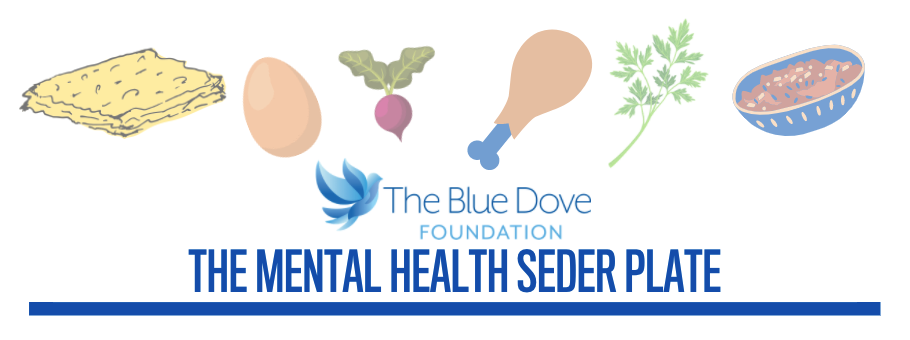
Mental Health Interpretations of the Seder Plate
Preview
More
showing
1-6
of
30
Page
1
of
5