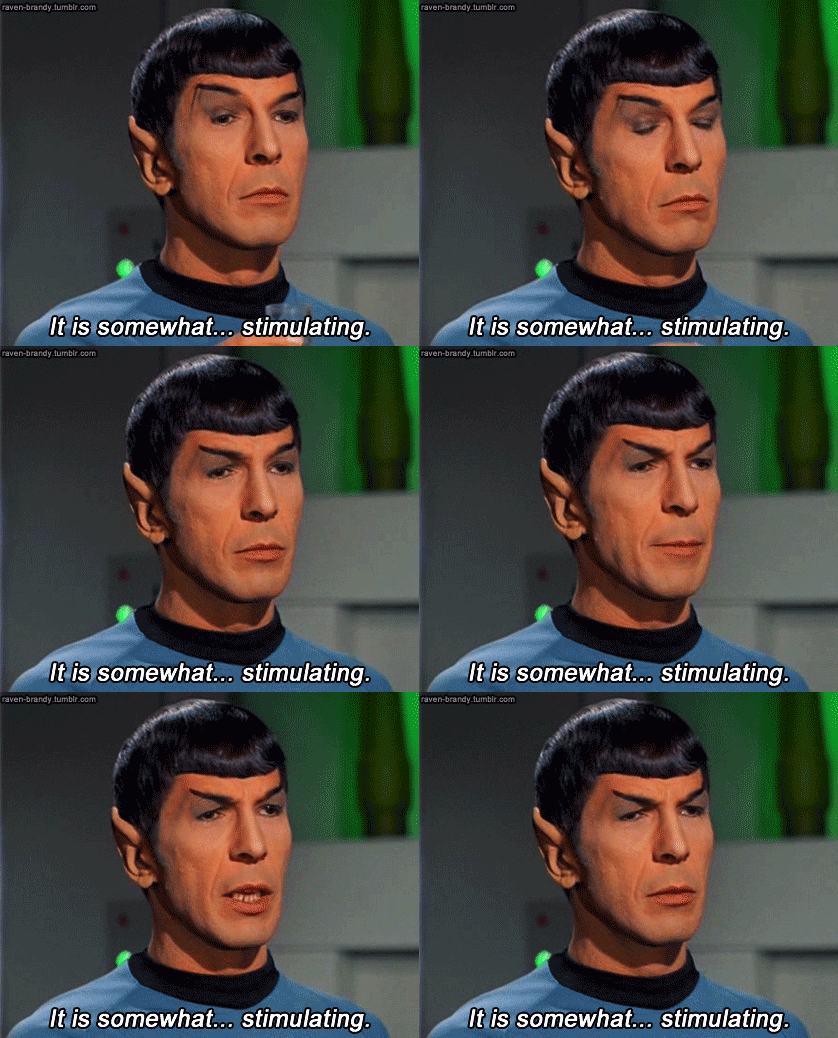
Bitter, Or Stimulating?: A Highly Logical Perspective on Maror
Preview
More

Aquaman Walking Into A Second Handwashing Like...
Preview
More
Oh, Dayenu — our annual opportunity to revisit a list of some of the miracles that followed the Exodus: from slavery in Egypt, traveling across the Red Sea and into the desert, where the Jewish people were gifted with the Torah, wandered for 40 years and eventually came to the land of Israel. And after every incident recounted, we repeat, “dayenu,” meaning “it was more than we deserved,” or “it would have been enough.”
But what if you’re a little more introspective about Passover as a whole this year? Or need to lighten things up with a little pop culture alongside your contemplation?
In Greta Gerwig’s highly entertaining film, Barbie (Margot Robbie) and Ken (Ryan Gosling) showed us the difference between the land of Barbies and our real world: what it’s like when doll-perfection in the land of no choices meets reality and provides different paths that, if taken, can shape our lives differently. Plus, they do journey through a desert and across an ocean to a promised land of sorts — Los Angeles — so that's prime Exodus material right there.
I couldn’t bring Gosling’s particular Kenergy to each of your seder tables — instead, here are some Passover-inspired lyrics for you to layer on top of the ear worm that is "I'm Just Ken.".
As you meditate on freedom, choice, song, longing, hope and challenge this year, know that you bring your own special Dayen-ergy to Passover. And whether your job is breaking the matzah or just "beach," whether you’re “Ken,” or “Lo,” or “Ulai” (that’s yes, no or maybe in Hebrew), whether you think the entire text is sacred or that there are some parts of the movie — er, the Haggadah — that should have been edited out in post, consider this your invitation to think about what challenges us and what brings us together under one roof, from my Mojo Dojo Casa House to wherever yours is, all over the world.
May your travels through the desert bring you closer to fine.
Lyrics by Esther D. Kustanowitz, in the style of “I’m Just Ken” (from the “Barbie” soundtrack)
Karaoke audio: https://www.youtube.com/watch?v=B7OpLSunE_w
Gosling video version: https://www.youtube.com/watch?v=RIHExGaxfPE
At seder time, we're singing Dayenu
I don’t know what to do
My heart’s conflicted every time, oh why…
Matzah crumbs are lying on the floor
Elijah’s at the door
So fill another cup of wine
The Haggadah will be fine
Who knows ten? Why must we sing this song again?
Is it our destiny to overthink the details of our history?
We depend
On a Passover meal with friends
And family that will help us see ourselves as if we too / are truly free
[DANCE BREAK]
I wanna know what it’s like to feel, liberation?
And am I, the wicked child, feeling consternation?
And is that, the wrath of God, or constipatioooon?
[softly, ascending] It’s the matzah…
[KENS DANCE FIGHT]
Can you feel Dayen-ergy?
Feels so real, Dayen-ergy
That’s enough Dayen-ergy
It’s Big Seder Energy
[BACK TO JUST KEN]
Say Amen, how many plagues, it’s also ten
It’s so expensive getting matzah at the corner store or grocery.
Haggadot
End with a song about a goat
Who was consumed by someone’s caaat who was then bitten by some-bo-dy’s dog
Dayenu (means that’s enough)
And God did a lot of stuff
Some stories may be rough, but let’s stay friends
Our amends (tikkun olam)
Let’s meet in Jerusalumm
Which means ‘city of peace’ so say amen.
And let’s saaaayyy Ahhhh Men!!!
Author's prayer: May all who are hungry find sustenance. Amen to homecomings, to health, to freedom, especially for the hostages, and to building toward peace, safety and wholeness in the region. Here's to next year in a "city of peace," wherever you are.
Can you feel the Dayen-ergy? It would have been Ken-ough
Preview
More
Bitter, Or Stimulating?: A Highly Logical Perspective on Maror
Preview
More
Aquaman Walking Into A Second Handwashing Like...
Preview
More
Oh, Dayenu — our annual opportunity to revisit a list of some of the miracles that followed the Exodus: from slavery in Egypt, traveling across the Red Sea and into the desert, where the Jewish people were gifted with the Torah, wandered for 40 years and eventually came to the land of Israel. And after every incident recounted, we repeat, “dayenu,” meaning “it was more than we deserved,” or “it would have been enough.”
But what if you’re a little more introspective about Passover as a whole this year? Or need to lighten things up with a little pop culture alongside your contemplation?
In Greta Gerwig’s highly entertaining film, Barbie (Margot Robbie) and Ken (Ryan Gosling) showed us the difference between the land of Barbies and our real world: what it’s like when doll-perfection in the land of no choices meets reality and provides different paths that, if taken, can shape our lives differently. Plus, they do journey through a desert and across an ocean to a promised land of sorts — Los Angeles — so that's prime Exodus material right there.
I couldn’t bring Gosling’s particular Kenergy to each of your seder tables — instead, here are some Passover-inspired lyrics for you to layer on top of the ear worm that is "I'm Just Ken.".
As you meditate on freedom, choice, song, longing, hope and challenge this year, know that you bring your own special Dayen-ergy to Passover. And whether your job is breaking the matzah or just "beach," whether you’re “Ken,” or “Lo,” or “Ulai” (that’s yes, no or maybe in Hebrew), whether you think the entire text is sacred or that there are some parts of the movie — er, the Haggadah — that should have been edited out in post, consider this your invitation to think about what challenges us and what brings us together under one roof, from my Mojo Dojo Casa House to wherever yours is, all over the world.
May your travels through the desert bring you closer to fine.
Lyrics by Esther D. Kustanowitz, in the style of “I’m Just Ken” (from the “Barbie” soundtrack)
Karaoke audio: https://www.youtube.com/watch?v=B7OpLSunE_w
Gosling video version: https://www.youtube.com/watch?v=RIHExGaxfPE
At seder time, we're singing Dayenu
I don’t know what to do
My heart’s conflicted every time, oh why…
Matzah crumbs are lying on the floor
Elijah’s at the door
So fill another cup of wine
The Haggadah will be fine
Who knows ten? Why must we sing this song again?
Is it our destiny to overthink the details of our history?
We depend
On a Passover meal with friends
And family that will help us see ourselves as if we too / are truly free
[DANCE BREAK]
I wanna know what it’s like to feel, liberation?
And am I, the wicked child, feeling consternation?
And is that, the wrath of God, or constipatioooon?
[softly, ascending] It’s the matzah…
[KENS DANCE FIGHT]
Can you feel Dayen-ergy?
Feels so real, Dayen-ergy
That’s enough Dayen-ergy
It’s Big Seder Energy
[BACK TO JUST KEN]
Say Amen, how many plagues, it’s also ten
It’s so expensive getting matzah at the corner store or grocery.
Haggadot
End with a song about a goat
Who was consumed by someone’s caaat who was then bitten by some-bo-dy’s dog
Dayenu (means that’s enough)
And God did a lot of stuff
Some stories may be rough, but let’s stay friends
Our amends (tikkun olam)
Let’s meet in Jerusalumm
Which means ‘city of peace’ so say amen.
And let’s saaaayyy Ahhhh Men!!!
Author's prayer: May all who are hungry find sustenance. Amen to homecomings, to health, to freedom, especially for the hostages, and to building toward peace, safety and wholeness in the region. Here's to next year in a "city of peace," wherever you are.
Can you feel the Dayen-ergy? It would have been Ken-ough
Preview
More
showing
1-6
of
70
Page
1
of
12