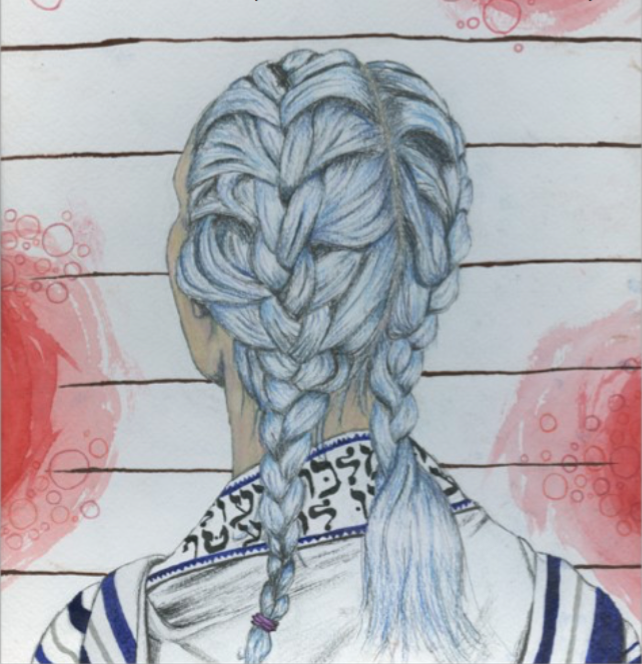
For hundreds of years, the Israelites were slaves in Egypt. After the Ten Plagues, Moses led his people out of the suffering of Pharaoh's slavery, yet their march to freedom was strenuous. Oppression could not be escaped immediately, but rather took the steps of many down a long, arduous path. In modern times, we have not yet escaped the shackles of oppression: racism, classism, and what we are here to discuss today: rape culture. Sexism is just as real today as it was 50, 100, 500 years ago. However, it sometimes looks a little different, and it can be masked by our reluctance to talk about our experiences. The breaking of these chains, is not without strain, but in the act of addressing them, we literally move forward.
This activity is meant to help the Seder participants think through and embody the ways in which they are affected by and perpetuate rape culture. Everyone should stand in a circle while the leader reads aloud the following instructions.
Leader: All of us are affected by our culture of permissiveness around rape culture in different ways. Some of us are a ected in obvious ways like experiencing street harassment, being shamed for what we wear or how we express our sexuality. Some of us are a ected in more subtle ways, such as being told to “man up” or feeling pres- sured to laugh at sexist jokes, even when we don’t nd them funny. One way we can begin to shut down rape culture is to speak up when we experience it, and form bonds with people who can relate. In telling our stories, we reclaim the spaces and relationships that rape culture seeks to isolate us all away from by refusing to stay silent, ashamed, or lonely.
Together: We who stand in this circle are members of a radical community of witnesses. Our power lies in our willingness to witness each other, and see ourselves in experiences that aren’t our own.
Leader: I am going to read a series of prompts. Please step forward into the circle if/when any of them describe personal experiences of the rape culture in which you live. After you step forward, pause in the middle of the circle and look into the eyes of everyone standing with you. Notice the people who are not standing with you. Notice how you feel. If you do not step in for a particular prompt, consider why not and notice how you feel. Should you feel uncomfortable stepping into the circle for any of the following prompts, there is absolutely no pressure to do so.
Telling Our Stories: List of Prompts for Group Leader
My elected representatives are mostly people of my own gender.
The more prestigious and powerful the elected position, the more this is true.
If I get excited about something frivolous, it won’t be attributed to my gender or be understood
as indicative of a general inability to deal with serious issues. I never have to worry
about being called ditzy, shallow, or an ‘airhead.’
If I’m shy, quiet, or too outspoken, I might be perceived as ‘cold’ or ‘bitchy’
I worry about the message my wardrobe sends about my sexual availability.
If I am sexual in any way, there is a chance that I will be labeled a “slut.”
People of my gender will almost certainly praise or valorize me for my promiscuity.
Complete strangers sometimes walk up to me on the street and tell me to “smile.”
If I am in a dense crowd or a packed subway car, I don’t worry about being groped or harassed.
Violence that happens to me or members of my gender is never put into diminutive
special interest categories like “acquaintance rape” or “domestic violence.”
I have been taught speci c safety techniques like keeping my keys and cell phone
in my hand while walking alone after dark in public spaces.
Every major religion in the world is primarily led by people of my gender.
Even God, in major religions, is depicted or described as being of my gender.
I did not grow up thinking that I should be the head of my household,
or that my spouse and children should be subservient to me.
I have told or laughed at sexist jokes, either because they were funny, or because I wanted to t in.
Revenge of Dinah: Telling Our Stories
Preview
More
A simple piece of Matzah serves to remind us of the immense suffering of ancient slavery. Now we take into account a second item, bitter chocolate, to remind us of modern suffering. One might question how chocolate is representative of hardship, for its purpose is to satisfy one’s pleasures, to be eaten in times of love and craving. Simply put, it is expected to be sweet, but when it is not, the unwanted chocolate is automatically dismissed and rejected. The expectations of chocolate is to be sweet and readily available for one’s satisfaction. Victims/survivors of rape culture can be seen in a similar light. A prize to be won by the hands of a pursuer, it softens, melts, drip, drip, drip. Their dignity mutilated down the wrist, almost ink, slowly hardening to etch su ering like blood. No longer a clean-cut square, the chocolate is transformed into a desired shape, sugar stu ed in to make it what it is not. Today, we embrace chocolate in its plain form, celebrating not its bitterness, but its strength.
Everyone at the table should eat a piece of bitter chocolate and consider quietly the ways in which they feel pressured to take shapes that aren’t natural to them.
As feminists and as Jews, language is one of the most important tools we have to address the social injustices around us. Though it can seem nit-picky, it is crucial for us to be mindful and intentional about the words we use to describe ourselves, our work, and the people we collaborate with. We cannot do good work or protect ourselves and our communities if we can’t or won’t.
Currently, there is much debate in the wider social justice community about the term ‘ally’ which has historically been used to describe someone who identi es with particular injustices and feels committed to the people a ected by them. Many people, especially folks of color and other people oppressed by systematic injustice, feel frustrated by privileged, young, white people who claim to be “allies” to causes that have nothing to do with them by either not doing enough (i.e. posting on social media in faux “solidarity” but never actually showing up at organized e orts in-person) or doing too much (i.e. refusing to recognize how their privileges take up way too much space and undermine the work already being done by the same folks who are oppressed by the issues in the rst place). Although allies always mean well, their efforts to show solidarity may actually end up doing nothing to help the cause, and in some cases, may unknowingly result in harm and/or the perpetuation of oppression.
As a result, some social justice workers make the distinction between “ally” and “accomplice” in their efforts. Specifically, the goal is for people to understand the benevolently-caused damages done by well-meaning allies, and help people to be more intentional about becoming “accomplices”. The list on the next page (The RTI 10 Commandments of Being an Accomplice, Fighting Patriarchy, and Shutting down Rape Culture) is designed to help you, our readers, think through the ways in which you can use your power to become accomplices, rather than allies, in the disruption of rape culture. We want to acknowledge that being an accomplice is inherently risky because it sometimes necessitates using your own privileges and power in ways that might complicate your social status. We understand that everyone has various thresholds for this kind of emotional labor, and that some folks aren’t able to risk their physical or psychological safety some or all of the time. We would also like to give a special shout out, in particular, to the male-identified and cis-gender folks who are reading this because of the tremendous potential they have to use their gender privileges to hold other male-identified and cis- gender people accountable for their words and actions.
The RTI 10 commandments of being an accomplice, fighting patriarchy, and shutting down rape culture.
I. Hold others in your life accountable. Don’t make excuses for anyone- if they are making rape jokes, or bragging about non-consensual sex, do not enable them by laughing along because you are nervous about not tting in. Hold abusers accountable for their actions: do not let them make excuses like blaming the victim, alcohol, or drugs for their behavior.
II. Think more critically about the messages that are perpetuated in media and popular culture. It is okay to question what you see and hear if it doesn’t feel safe or respectful.
III. Do your research, listen, and read. The internet is a great tool for staying informed about actions you can take to demonstrate your solidarity, as well as communities to support who are already doing great work. You can also listen to the testimonies and experiences of survivors and victims of sexual violence, street harassment, and other gender-based oppressions. In addition, choose to believe people when they report being raped or experiencing sexual violence of any kind.
IV. Use the knowledge you have gained to educate others with similar privileges as you. Survivors and victims experience huge emotional labor when asked to educate others about how to shut down rape culture. Help to relieve some of it by going out of your way to start conversations about it with your friends and family.
V. Know when to step back and not take up too much space. Your job is not to speak on behalf of others or decide what the agenda should be. Show up, but don’t take over.
VI. Don't let privilege shame get you down! It's not always easy or comfortable to recognize our privileges, especially when we start to understand how they perpetuate systems of oppression. Process your feelings about this with people who share similar privileges, and allow it to motivate you to be a good accomplice. Privilege shame isn't helpful to anyone!
VII. Avoid using language that objectifies or degrades women, trans people, and gender non- binary people. Similarly, don’t perpetuate toxic masculinity by telling boys to “man up” or encouraging “locker room talk”.
VIII. Think critically about the media’s message about women, men, relationships, and violence.
IX. Always communicate with sexual partners and do not assume consent, even if they are under the influence of drugs or alcohol.
X. Define your own manhood, womanhood, or other gender expression in ways that feel healthy and authentic, and encourage others to do the same. Do not let stereotypes shape your actions or whether “respect” is on the table. It’s always on the table.
-
Download the full haggadah here: https://jufwebfiles.org/pdf/teens/RTI-Haggadah-Final.pdf
Take A Risk & Be An Accomplice
Preview
More
When the Jews were enslaved in Egypt, they suffered unimaginably, oppressed by systematic enslavement and brutality. And yet, when Moses arrived bearing the means to their salvation, the rst real hope that was accessible to them for as long as anyone could remember, their rst instincts were incredulousness and rejection. Even after the slaves were liberated, many of them ached for the predictability and relative stability of slavery (knowing where their food was coming from, understanding their role in the world, etc.), and felt scared of their new freedom because it lacked stability and routine.
A similar phenomenon can be observed in our society today. Sometimes those of use who attempt to stop oppression are met with resistance by others who are scared to change the status quo because (together we read):
1) it either serves them in some way, or
2) they are afraid of the unknown potential of liberation and what it means for them.
People are not open to changing the systems that they perpetuate, including manifestations of sexism in our society, even when they themselves are being oppressed by these systems. What is this phenomenon, this self- sabotaging human tendency?
Leader: We put the smaller piece of mat- zah, the part symbolizing our irrational fear, between the other two whole matzot, where it is overshadowed and made insignificant.
Together: As participants in this Seder, we stand against complacency.
With a better world in mind, we break the matzah, just as we break away from the sexist attitudes, trivialized rape jokes, homophobia and transphobia, victim-blaming, sexist media, toxic masculinity, marginalization, and all oppression that people of all genders know so painfully well. We acknowledge the fear that’s stopping us from taking that step away from the comfort of familiarity toward a better, if unpredictable future; and we break away from that as well.
The leader should take the afikomen and hide it somewhere in the room.
The fourth cup is the cup of praise and restoration. In the past few hours, we have reflected upon our actions and the actions of others. We have supported one another, and we have held space for one another. Now is the time to go back into the world, armed with new knowledge about the culture of sexual violence we all live in. We are all capable of making a difference in our lifetime, whether that means continuing on our path or starting anew. Either way, now is the time to be thankful for the chance that we all have been given to do good, and now is the time to act upon it.
Raise your glass as you recite this blessing, and then enjoy your fourth cup of juice.
בָּרוּךְ אַתָּה יְיָ, אֱלֹהֵינוּ מֶלֶךְ הָעוֹלָם, בּוֹרֵא פְּרִי הַגָּפֶן
Baruch Atah Adonai, Eloheinu Melech ha-olam, borei p’ree hagafen.
We praise God, Ruler of Everything, who creates the fruit of the vine
Maror are bitter herbs eaten during a seder. There is no longer a biblical command to eat maror but we still do to remember our times as slaves in Egypt, the maror can also be used to remind everyone of the bitter reality of daily experiences living in a rape culture. Maror represents the bitterness of bondage. Why do we eat charoset (the sweet mixture of apples, nuts, and wine)? It symbolizes the mortar for the bricks our ancestors laid in Egypt. Though it represents slave labor, charoset is sweet, reminding us that sometimes constriction or enslavement can be masked in familiar sweetness. Eating the two together, we take the opportunity to be mindful of the sweetness of community that supports our emotional labor in healing from a culture of sexual violence.
Eat the bitter herbs together on a piece of matzah
ברוּךְ אַתָּה יְיַָ אֱלֹהֵֽינוּ מֶֽלֶךְ הָעוֹלָם, אֲשֶׁר קִדְּשָֽׁנוּ בְּמִצְוֹתָיו וְצִוָּֽנוּ עַל אֲכִילַת מרוֹר
Baruch Atah Adonai, Eloheinu Melech ha-olam, asher kid’shanu b’mitzvotav v’tzivanu al achilat maror.
We praise God, Ruler of Everything, who made us holy through obliga ons, commanding us to eat bi er herbs.
Revenge of Dinah: Maror & Charoset
Preview
More
For hundreds of years, the Israelites were slaves in Egypt. After the Ten Plagues, Moses led his people out of the suffering of Pharaoh's slavery, yet their march to freedom was strenuous. Oppression could not be escaped immediately, but rather took the steps of many down a long, arduous path. In modern times, we have not yet escaped the shackles of oppression: racism, classism, and what we are here to discuss today: rape culture. Sexism is just as real today as it was 50, 100, 500 years ago. However, it sometimes looks a little different, and it can be masked by our reluctance to talk about our experiences. The breaking of these chains, is not without strain, but in the act of addressing them, we literally move forward.
This activity is meant to help the Seder participants think through and embody the ways in which they are affected by and perpetuate rape culture. Everyone should stand in a circle while the leader reads aloud the following instructions.
Leader: All of us are affected by our culture of permissiveness around rape culture in different ways. Some of us are a ected in obvious ways like experiencing street harassment, being shamed for what we wear or how we express our sexuality. Some of us are a ected in more subtle ways, such as being told to “man up” or feeling pres- sured to laugh at sexist jokes, even when we don’t nd them funny. One way we can begin to shut down rape culture is to speak up when we experience it, and form bonds with people who can relate. In telling our stories, we reclaim the spaces and relationships that rape culture seeks to isolate us all away from by refusing to stay silent, ashamed, or lonely.
Together: We who stand in this circle are members of a radical community of witnesses. Our power lies in our willingness to witness each other, and see ourselves in experiences that aren’t our own.
Leader: I am going to read a series of prompts. Please step forward into the circle if/when any of them describe personal experiences of the rape culture in which you live. After you step forward, pause in the middle of the circle and look into the eyes of everyone standing with you. Notice the people who are not standing with you. Notice how you feel. If you do not step in for a particular prompt, consider why not and notice how you feel. Should you feel uncomfortable stepping into the circle for any of the following prompts, there is absolutely no pressure to do so.
Telling Our Stories: List of Prompts for Group Leader
My elected representatives are mostly people of my own gender.
The more prestigious and powerful the elected position, the more this is true.
If I get excited about something frivolous, it won’t be attributed to my gender or be understood
as indicative of a general inability to deal with serious issues. I never have to worry
about being called ditzy, shallow, or an ‘airhead.’
If I’m shy, quiet, or too outspoken, I might be perceived as ‘cold’ or ‘bitchy’
I worry about the message my wardrobe sends about my sexual availability.
If I am sexual in any way, there is a chance that I will be labeled a “slut.”
People of my gender will almost certainly praise or valorize me for my promiscuity.
Complete strangers sometimes walk up to me on the street and tell me to “smile.”
If I am in a dense crowd or a packed subway car, I don’t worry about being groped or harassed.
Violence that happens to me or members of my gender is never put into diminutive
special interest categories like “acquaintance rape” or “domestic violence.”
I have been taught speci c safety techniques like keeping my keys and cell phone
in my hand while walking alone after dark in public spaces.
Every major religion in the world is primarily led by people of my gender.
Even God, in major religions, is depicted or described as being of my gender.
I did not grow up thinking that I should be the head of my household,
or that my spouse and children should be subservient to me.
I have told or laughed at sexist jokes, either because they were funny, or because I wanted to t in.
Revenge of Dinah: Telling Our Stories
Preview
More
A simple piece of Matzah serves to remind us of the immense suffering of ancient slavery. Now we take into account a second item, bitter chocolate, to remind us of modern suffering. One might question how chocolate is representative of hardship, for its purpose is to satisfy one’s pleasures, to be eaten in times of love and craving. Simply put, it is expected to be sweet, but when it is not, the unwanted chocolate is automatically dismissed and rejected. The expectations of chocolate is to be sweet and readily available for one’s satisfaction. Victims/survivors of rape culture can be seen in a similar light. A prize to be won by the hands of a pursuer, it softens, melts, drip, drip, drip. Their dignity mutilated down the wrist, almost ink, slowly hardening to etch su ering like blood. No longer a clean-cut square, the chocolate is transformed into a desired shape, sugar stu ed in to make it what it is not. Today, we embrace chocolate in its plain form, celebrating not its bitterness, but its strength.
Everyone at the table should eat a piece of bitter chocolate and consider quietly the ways in which they feel pressured to take shapes that aren’t natural to them.
As feminists and as Jews, language is one of the most important tools we have to address the social injustices around us. Though it can seem nit-picky, it is crucial for us to be mindful and intentional about the words we use to describe ourselves, our work, and the people we collaborate with. We cannot do good work or protect ourselves and our communities if we can’t or won’t.
Currently, there is much debate in the wider social justice community about the term ‘ally’ which has historically been used to describe someone who identi es with particular injustices and feels committed to the people a ected by them. Many people, especially folks of color and other people oppressed by systematic injustice, feel frustrated by privileged, young, white people who claim to be “allies” to causes that have nothing to do with them by either not doing enough (i.e. posting on social media in faux “solidarity” but never actually showing up at organized e orts in-person) or doing too much (i.e. refusing to recognize how their privileges take up way too much space and undermine the work already being done by the same folks who are oppressed by the issues in the rst place). Although allies always mean well, their efforts to show solidarity may actually end up doing nothing to help the cause, and in some cases, may unknowingly result in harm and/or the perpetuation of oppression.
As a result, some social justice workers make the distinction between “ally” and “accomplice” in their efforts. Specifically, the goal is for people to understand the benevolently-caused damages done by well-meaning allies, and help people to be more intentional about becoming “accomplices”. The list on the next page (The RTI 10 Commandments of Being an Accomplice, Fighting Patriarchy, and Shutting down Rape Culture) is designed to help you, our readers, think through the ways in which you can use your power to become accomplices, rather than allies, in the disruption of rape culture. We want to acknowledge that being an accomplice is inherently risky because it sometimes necessitates using your own privileges and power in ways that might complicate your social status. We understand that everyone has various thresholds for this kind of emotional labor, and that some folks aren’t able to risk their physical or psychological safety some or all of the time. We would also like to give a special shout out, in particular, to the male-identified and cis-gender folks who are reading this because of the tremendous potential they have to use their gender privileges to hold other male-identified and cis- gender people accountable for their words and actions.
The RTI 10 commandments of being an accomplice, fighting patriarchy, and shutting down rape culture.
I. Hold others in your life accountable. Don’t make excuses for anyone- if they are making rape jokes, or bragging about non-consensual sex, do not enable them by laughing along because you are nervous about not tting in. Hold abusers accountable for their actions: do not let them make excuses like blaming the victim, alcohol, or drugs for their behavior.
II. Think more critically about the messages that are perpetuated in media and popular culture. It is okay to question what you see and hear if it doesn’t feel safe or respectful.
III. Do your research, listen, and read. The internet is a great tool for staying informed about actions you can take to demonstrate your solidarity, as well as communities to support who are already doing great work. You can also listen to the testimonies and experiences of survivors and victims of sexual violence, street harassment, and other gender-based oppressions. In addition, choose to believe people when they report being raped or experiencing sexual violence of any kind.
IV. Use the knowledge you have gained to educate others with similar privileges as you. Survivors and victims experience huge emotional labor when asked to educate others about how to shut down rape culture. Help to relieve some of it by going out of your way to start conversations about it with your friends and family.
V. Know when to step back and not take up too much space. Your job is not to speak on behalf of others or decide what the agenda should be. Show up, but don’t take over.
VI. Don't let privilege shame get you down! It's not always easy or comfortable to recognize our privileges, especially when we start to understand how they perpetuate systems of oppression. Process your feelings about this with people who share similar privileges, and allow it to motivate you to be a good accomplice. Privilege shame isn't helpful to anyone!
VII. Avoid using language that objectifies or degrades women, trans people, and gender non- binary people. Similarly, don’t perpetuate toxic masculinity by telling boys to “man up” or encouraging “locker room talk”.
VIII. Think critically about the media’s message about women, men, relationships, and violence.
IX. Always communicate with sexual partners and do not assume consent, even if they are under the influence of drugs or alcohol.
X. Define your own manhood, womanhood, or other gender expression in ways that feel healthy and authentic, and encourage others to do the same. Do not let stereotypes shape your actions or whether “respect” is on the table. It’s always on the table.
-
Download the full haggadah here: https://jufwebfiles.org/pdf/teens/RTI-Haggadah-Final.pdf
Take A Risk & Be An Accomplice
Preview
More
When the Jews were enslaved in Egypt, they suffered unimaginably, oppressed by systematic enslavement and brutality. And yet, when Moses arrived bearing the means to their salvation, the rst real hope that was accessible to them for as long as anyone could remember, their rst instincts were incredulousness and rejection. Even after the slaves were liberated, many of them ached for the predictability and relative stability of slavery (knowing where their food was coming from, understanding their role in the world, etc.), and felt scared of their new freedom because it lacked stability and routine.
A similar phenomenon can be observed in our society today. Sometimes those of use who attempt to stop oppression are met with resistance by others who are scared to change the status quo because (together we read):
1) it either serves them in some way, or
2) they are afraid of the unknown potential of liberation and what it means for them.
People are not open to changing the systems that they perpetuate, including manifestations of sexism in our society, even when they themselves are being oppressed by these systems. What is this phenomenon, this self- sabotaging human tendency?
Leader: We put the smaller piece of mat- zah, the part symbolizing our irrational fear, between the other two whole matzot, where it is overshadowed and made insignificant.
Together: As participants in this Seder, we stand against complacency.
With a better world in mind, we break the matzah, just as we break away from the sexist attitudes, trivialized rape jokes, homophobia and transphobia, victim-blaming, sexist media, toxic masculinity, marginalization, and all oppression that people of all genders know so painfully well. We acknowledge the fear that’s stopping us from taking that step away from the comfort of familiarity toward a better, if unpredictable future; and we break away from that as well.
The leader should take the afikomen and hide it somewhere in the room.
The fourth cup is the cup of praise and restoration. In the past few hours, we have reflected upon our actions and the actions of others. We have supported one another, and we have held space for one another. Now is the time to go back into the world, armed with new knowledge about the culture of sexual violence we all live in. We are all capable of making a difference in our lifetime, whether that means continuing on our path or starting anew. Either way, now is the time to be thankful for the chance that we all have been given to do good, and now is the time to act upon it.
Raise your glass as you recite this blessing, and then enjoy your fourth cup of juice.
בָּרוּךְ אַתָּה יְיָ, אֱלֹהֵינוּ מֶלֶךְ הָעוֹלָם, בּוֹרֵא פְּרִי הַגָּפֶן
Baruch Atah Adonai, Eloheinu Melech ha-olam, borei p’ree hagafen.
We praise God, Ruler of Everything, who creates the fruit of the vine
Maror are bitter herbs eaten during a seder. There is no longer a biblical command to eat maror but we still do to remember our times as slaves in Egypt, the maror can also be used to remind everyone of the bitter reality of daily experiences living in a rape culture. Maror represents the bitterness of bondage. Why do we eat charoset (the sweet mixture of apples, nuts, and wine)? It symbolizes the mortar for the bricks our ancestors laid in Egypt. Though it represents slave labor, charoset is sweet, reminding us that sometimes constriction or enslavement can be masked in familiar sweetness. Eating the two together, we take the opportunity to be mindful of the sweetness of community that supports our emotional labor in healing from a culture of sexual violence.
Eat the bitter herbs together on a piece of matzah
ברוּךְ אַתָּה יְיַָ אֱלֹהֵֽינוּ מֶֽלֶךְ הָעוֹלָם, אֲשֶׁר קִדְּשָֽׁנוּ בְּמִצְוֹתָיו וְצִוָּֽנוּ עַל אֲכִילַת מרוֹר
Baruch Atah Adonai, Eloheinu Melech ha-olam, asher kid’shanu b’mitzvotav v’tzivanu al achilat maror.
We praise God, Ruler of Everything, who made us holy through obliga ons, commanding us to eat bi er herbs.
Revenge of Dinah: Maror & Charoset
Preview
More
showing
1-6
of
41
Page
1
of
7

Revenge of Dinah: A Feminist Seder on Rape Culture in the Jewish Community
Preview