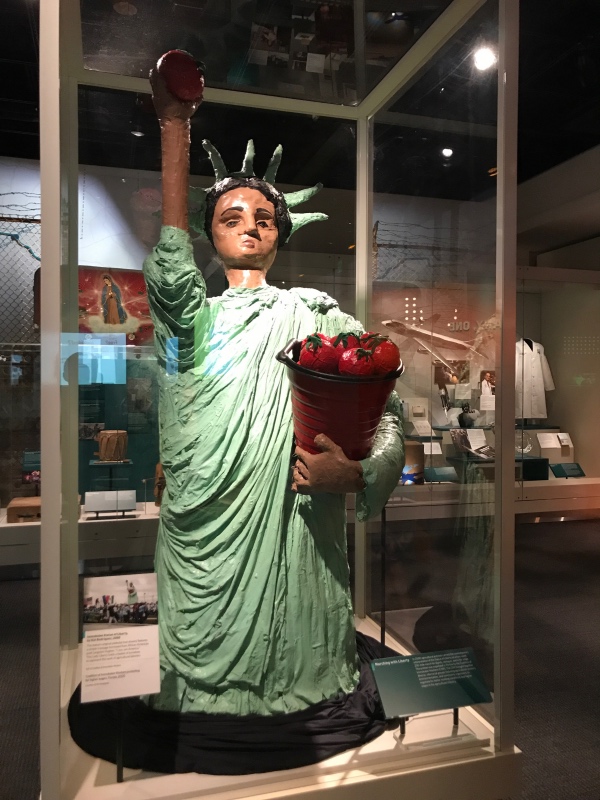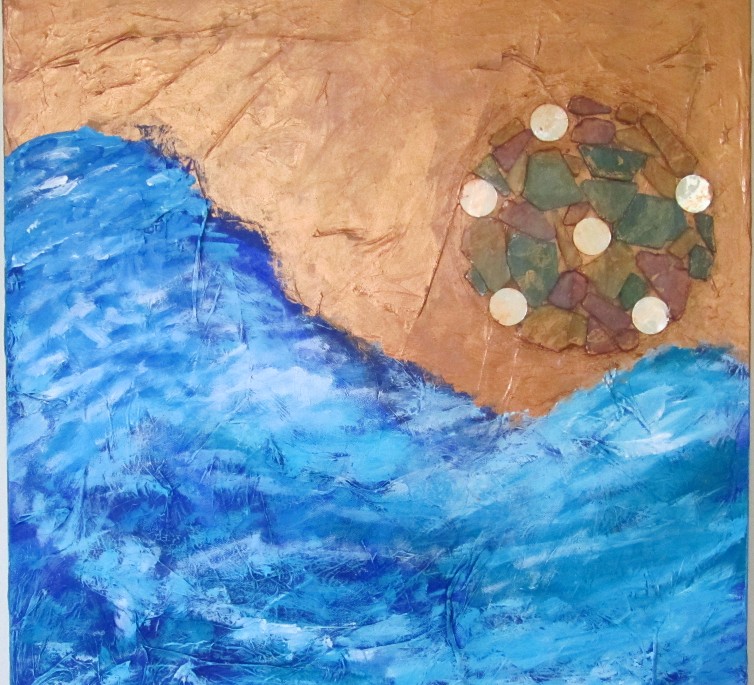
The Other Side of the River, the Other Side of the Sea, by T'ruah
Preview
Matzah, unleavened bread, reminds us both the bread of poverty that the ancient Israelites ate in Egypt and the bread of freedom that they ate in their rushed escape to freedom. Three matzot sit on a plate at the center of the table. At this point of the seder, we break the middle matzah in two, wrap one portion in a napkin, and set it aside, hidden from sight.
This division reminds us of the forced separation of communities and families, parents from children, spouses and siblings from each other. The visible half becomes our bread of affliction, representing the suffering of those who do not know where their loved ones are. The hidden half, called the afikoman, represents the horrors hidden from our sight. At the end of the seder, we look for the afikoman, and similarly commit to seeking redemption. Until families and communities become one whole again, our seder cannot truly end.
I am 38 years old, married and a father of two children. I was born in Niala, South Darfur. My father was murdered during an attack on our village in 2003. We had to run away and seek refuge in the “Kalma” refugee camp. My mother, wife and children still live there until today. I miss them very much and I don’t know what their situation is. I came to Israel to seek protection but I was imprisoned. I have been in prison for almost two years. I don’t want to be in prison any more. –Testimony of A.A.M.S., 1/18/14 1
We pour a second cup, the cup of storytelling, and over it we begin to tell tales of Exodus old and new.
“No people have had a more inadequate preparation, educational and economic, for American citizenship.”
This quote comes not from today’s rightwing media but from McClure’s Magazine in 1907, referring to Russian Jews. Jews have been targets of the same rhetoric hurled at today’s immigrants. As HIAS President and CEO Mark Hetfield likes to say, “We used to help refugees because they were Jewish; now we help refugees because we are Jewish.” The history of Eastern European Jews immigrating to the U.S. through Ellis Island looms large in the American Jewish psyche. But we must also remember and honor the diversity of Jewish experiences:
• The first wave of Jews to arrive in America were Sephardim, who established synagogues and Jewish communities, some of which continue to operate today.
• Native American Jews are not immigrants.
• African-American Jews likely have ancestors who were brought here violently and against their will.
• Converts may come from families that have been here for hundreds of years.
• Many Jews are themselves immigrants; for them, the story is not one of long ago but of here and now.
Our shared sacred story is one of migration, seeking the promised land and being exiled from it in cycles, but each individual also has their personal stories.
Jewish Diversity: Great, Mighty, and Multitudinous
Preview
More
The beauty of Urchatz was revealed to me during a women's seder. Each participant washed the hands of another with care and kavanah (intentionality)—and without words. The sisterhood created in the sacred silence elevates communal consciousness. How will we utilize this state of purity? V'ahavtah l're'echa kamochah - to love the other as ourself.
How will this ancient wisdom propel us forward to empower the silent? How will we elevate the hands of all those still in Mitzrayim?
--Jessica K. Shimberg, Spiritual Leader, The Little Minyan Kehilla, Columbus, OH; ALEPH Rabbinical Program Class of 2018
The first time I heard a trafficking survivor speak many years ago, she told the story of her parents trafficking her for sex from the time she was a young girl until she was an adult. I sat in horror, listening to her calm recollection of how both her mother and father trafficked her, sometimes leaving her for days at a time in a makeshift brothel when she was barely old enough to read and write.
Her story was my T’ruah – a decibel defying call to action to open doors, pull back curtains, and shout from the rooftops the pain and suffering of trafficked individuals in our midst.
The call guides my work at the National Council of Jewish Women, alongside incredible and passionate advocates around the country, to raise awareness about trafficking in the United States where children are bought and sold in every state, 24 hours a day, 7 days a week. And the call informs my work to create lasting social change through legislative advocacy – working with lawmakers to address the systemic issues that allow trafficking to exist, including lack of education and opportunities, and passing legislation to reform the child welfare system which effectively serves as a supply chain to traffickers.
The sound of the shofar on Passover reminds me not only of one woman’s unspeakable journey, but of my greater responsibility to ensure my call becomes a collective call to action for all of us in the Jewish community.
-- Jody Rabhan, Director of Washington Operations, National Council of Jewish Women
In the medieval midrash Pirkei deRebbe Eliezer (ch. 43), Rabbi Nechunya ben Hakanah teaches that even Pharaoh was capable of teshuvah. Just as Pharaoh sinned by saying, “Who is the ETERNAL / Mi Adonai ? ” (Exodus 5:2), he repented with the same language, saying, “Who is like the ETERNAL / Mi Chamocha ?” (Exodus 15:11). God rescued him from the Red Sea and made him King of Nineveh. When Jonah came to prophesy the destruction of Nineveh, at once Pharaoh led his people in teshuvah, and God spared the city.
The midrash has an epilogue, though: After 40 years, Nineveh backslid and was swallowed in the depths of the underworld. This teaches us that teshuvah is an ongoing process, never a closed ledger.
What might redemption look like today? What teshuvah does it demand from us?
• Reparations for African-Americans and Native Americans/First Nations
• An immigration policy that treats all people with respect and compassion — such as the “Free to Move, Free to Stay” framework proposed by United We Dream: https://unitedwedreamaction.org/framework-2020/
• Ecological sustainability, so that none would have to flee as climate refugees
• A civilization governed by values other than the bottom line and production of cheap goods
What else do you envision?
Excerpts from “Maror and Maggid: Clearing My Throat”
by Rabbi Mira Rivera, Romemu, NYC
They have reason to worry
because multiply we have
multiplied and we are the Other
African Latinx Asian and in-between
by way of Shanghai Bnei Anusim Cochin Jew Abayudaya
Jewish by way of mother by way of father you challenge
Observant by way of secular parents who may be practicing
Baal Baalat Teshuvah Jew
Jewish by Sefarad to the letter
by way of Yosef Caro
By way of the Rema
Strictly Halachic Jew
Neither Sefardi neither Mizrachi
neither Ashkenazi neither Israeli
Still a Diaspora Jew
I eat with my fingers
I dine with fine crystal
I have cheeks burning
Peach ruddy roasted warm coffee
Desert mocha midnight blue black Jew...
Jew in the pew Pew Report Jew
Forever an immigrant forever Yisrael
Forever wrestling honestly
Still proud to be a Jew
And yes, you’re very welcome
I’m a Person of Color
you can look at me
You can see me
I’m a Jew of Color
And I claim my space
But I do get it
Gotta justify presence
in almost every Jewish space
So where were we again?
Yes, I am Jewish
This is my name
I am not intermarried
And I did not take his name
Yes, I am a convert
Yes, I am a Rabbi
I am here just like you
And yes I am a Jew
So where were we again?
Now you tell me all about you
Excerpts from "Maror and Maggid: Clearing My Throat"
Preview
More
Matzah, unleavened bread, reminds us both the bread of poverty that the ancient Israelites ate in Egypt and the bread of freedom that they ate in their rushed escape to freedom. Three matzot sit on a plate at the center of the table. At this point of the seder, we break the middle matzah in two, wrap one portion in a napkin, and set it aside, hidden from sight.
This division reminds us of the forced separation of communities and families, parents from children, spouses and siblings from each other. The visible half becomes our bread of affliction, representing the suffering of those who do not know where their loved ones are. The hidden half, called the afikoman, represents the horrors hidden from our sight. At the end of the seder, we look for the afikoman, and similarly commit to seeking redemption. Until families and communities become one whole again, our seder cannot truly end.
I am 38 years old, married and a father of two children. I was born in Niala, South Darfur. My father was murdered during an attack on our village in 2003. We had to run away and seek refuge in the “Kalma” refugee camp. My mother, wife and children still live there until today. I miss them very much and I don’t know what their situation is. I came to Israel to seek protection but I was imprisoned. I have been in prison for almost two years. I don’t want to be in prison any more. –Testimony of A.A.M.S., 1/18/14 1
We pour a second cup, the cup of storytelling, and over it we begin to tell tales of Exodus old and new.
“No people have had a more inadequate preparation, educational and economic, for American citizenship.”
This quote comes not from today’s rightwing media but from McClure’s Magazine in 1907, referring to Russian Jews. Jews have been targets of the same rhetoric hurled at today’s immigrants. As HIAS President and CEO Mark Hetfield likes to say, “We used to help refugees because they were Jewish; now we help refugees because we are Jewish.” The history of Eastern European Jews immigrating to the U.S. through Ellis Island looms large in the American Jewish psyche. But we must also remember and honor the diversity of Jewish experiences:
• The first wave of Jews to arrive in America were Sephardim, who established synagogues and Jewish communities, some of which continue to operate today.
• Native American Jews are not immigrants.
• African-American Jews likely have ancestors who were brought here violently and against their will.
• Converts may come from families that have been here for hundreds of years.
• Many Jews are themselves immigrants; for them, the story is not one of long ago but of here and now.
Our shared sacred story is one of migration, seeking the promised land and being exiled from it in cycles, but each individual also has their personal stories.
Jewish Diversity: Great, Mighty, and Multitudinous
Preview
More
The beauty of Urchatz was revealed to me during a women's seder. Each participant washed the hands of another with care and kavanah (intentionality)—and without words. The sisterhood created in the sacred silence elevates communal consciousness. How will we utilize this state of purity? V'ahavtah l're'echa kamochah - to love the other as ourself.
How will this ancient wisdom propel us forward to empower the silent? How will we elevate the hands of all those still in Mitzrayim?
--Jessica K. Shimberg, Spiritual Leader, The Little Minyan Kehilla, Columbus, OH; ALEPH Rabbinical Program Class of 2018
The first time I heard a trafficking survivor speak many years ago, she told the story of her parents trafficking her for sex from the time she was a young girl until she was an adult. I sat in horror, listening to her calm recollection of how both her mother and father trafficked her, sometimes leaving her for days at a time in a makeshift brothel when she was barely old enough to read and write.
Her story was my T’ruah – a decibel defying call to action to open doors, pull back curtains, and shout from the rooftops the pain and suffering of trafficked individuals in our midst.
The call guides my work at the National Council of Jewish Women, alongside incredible and passionate advocates around the country, to raise awareness about trafficking in the United States where children are bought and sold in every state, 24 hours a day, 7 days a week. And the call informs my work to create lasting social change through legislative advocacy – working with lawmakers to address the systemic issues that allow trafficking to exist, including lack of education and opportunities, and passing legislation to reform the child welfare system which effectively serves as a supply chain to traffickers.
The sound of the shofar on Passover reminds me not only of one woman’s unspeakable journey, but of my greater responsibility to ensure my call becomes a collective call to action for all of us in the Jewish community.
-- Jody Rabhan, Director of Washington Operations, National Council of Jewish Women
In the medieval midrash Pirkei deRebbe Eliezer (ch. 43), Rabbi Nechunya ben Hakanah teaches that even Pharaoh was capable of teshuvah. Just as Pharaoh sinned by saying, “Who is the ETERNAL / Mi Adonai ? ” (Exodus 5:2), he repented with the same language, saying, “Who is like the ETERNAL / Mi Chamocha ?” (Exodus 15:11). God rescued him from the Red Sea and made him King of Nineveh. When Jonah came to prophesy the destruction of Nineveh, at once Pharaoh led his people in teshuvah, and God spared the city.
The midrash has an epilogue, though: After 40 years, Nineveh backslid and was swallowed in the depths of the underworld. This teaches us that teshuvah is an ongoing process, never a closed ledger.
What might redemption look like today? What teshuvah does it demand from us?
• Reparations for African-Americans and Native Americans/First Nations
• An immigration policy that treats all people with respect and compassion — such as the “Free to Move, Free to Stay” framework proposed by United We Dream: https://unitedwedreamaction.org/framework-2020/
• Ecological sustainability, so that none would have to flee as climate refugees
• A civilization governed by values other than the bottom line and production of cheap goods
What else do you envision?
Excerpts from “Maror and Maggid: Clearing My Throat”
by Rabbi Mira Rivera, Romemu, NYC
They have reason to worry
because multiply we have
multiplied and we are the Other
African Latinx Asian and in-between
by way of Shanghai Bnei Anusim Cochin Jew Abayudaya
Jewish by way of mother by way of father you challenge
Observant by way of secular parents who may be practicing
Baal Baalat Teshuvah Jew
Jewish by Sefarad to the letter
by way of Yosef Caro
By way of the Rema
Strictly Halachic Jew
Neither Sefardi neither Mizrachi
neither Ashkenazi neither Israeli
Still a Diaspora Jew
I eat with my fingers
I dine with fine crystal
I have cheeks burning
Peach ruddy roasted warm coffee
Desert mocha midnight blue black Jew...
Jew in the pew Pew Report Jew
Forever an immigrant forever Yisrael
Forever wrestling honestly
Still proud to be a Jew
And yes, you’re very welcome
I’m a Person of Color
you can look at me
You can see me
I’m a Jew of Color
And I claim my space
But I do get it
Gotta justify presence
in almost every Jewish space
So where were we again?
Yes, I am Jewish
This is my name
I am not intermarried
And I did not take his name
Yes, I am a convert
Yes, I am a Rabbi
I am here just like you
And yes I am a Jew
So where were we again?
Now you tell me all about you
Excerpts from "Maror and Maggid: Clearing My Throat"
Preview
More
showing
1-6
of
48
Page
1
of
8