FOUR CHILDREN, REGARDLESS OF AGE
The Haggadah tells of four children: the Chacham, the wise one; the Rasha, the wicked one; the Tam, the straightforward one; and finally, the one who doesn't know what to ask.
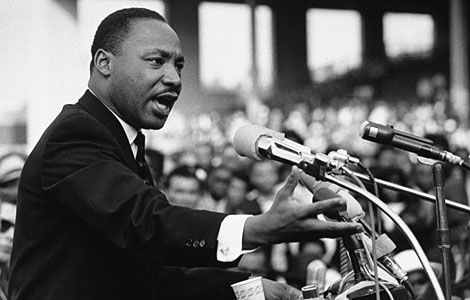
The Wise One/ The Chacham says: How do I become an anti-racist?
To that one we say: Do the best you can until you know better. Then when you know better, do better.1 Educate yourself about your own role in the mechanics of racism and how you can make choices to disrupt the structures and systems of injustice rather than perpetuating them.
The Wicked One/ The Rasha says: I’m not a racist, so racial justice is not about me.
To that one we say: You are complicit in a white America that slammed the door shut on the opportunity for the fundamental transformation of the civil rights movement.2 You may not be guilty but you are responsible.3
The Straightforward One / The Tam says: How do I even begin to confront racism?
To that one we say: Repentance means a new insight, a new spirit. It also means a course of action.3 Choose a place to begin, and that will be good enough for a start.
To the One Who Does Not Know What to Ask we say: We, too, are either ministers of the sacred or slaves of evil.4 Your liberation is bound up with mine; let us work together.5
Citations
¹ https://www.oprah.com/oprahs-lifeclass/the-powerful-lesson-maya-angelou-taught-oprah-video
2 https://time.com/5859214/james-baldwin-racism/
3https://voicesofdemocracy.umd.edu/heschel-religion-and-race-speech-text/
4 https://www.bc.edu/content/dam/files/centers/boisi/pdf/f10/Heschel_Insecurity_of_Freedom_excerpt.pdf
Maggid, which, like Haggadah, originates from the Hebrew root word fortell, has been designated as the official storytelling part of the Seder. We share the story of the Israelites’ escape from bondage after 400 years of oppression in Egypt each year to remind us that though we may be free at present, there are others who are not. By participating in a Seder we become deeply aware of the injustice of slavery, and so it is our responsibility to stay informed and educated and to loudly prevent continued human rights violations and slavery in our times. Unfortunately, some 2,000 years after the time of Moses, slavery has not been eradicated in the world. The trafficking of women and children within domestic, agricultural and sex industries is an enduring reality. Anti-Slavery International estimates that there are currently 20 million people being held as slaves throughout the world. Even this number is largely conjecture, since the voices of the oppressed are not easily heard. What is even more shocking is how prevalent this practice continues to be. The most common form of modern slavery is debt bondage, in which a person is made to give their body as a condition of their loan repayment. Frequently, in order to afford the journey to “freedom,” these people pay with their life savings and go into debt to individuals who make promises they have no intention of keeping. Instead of opportunity, what the immigrants find when they arrive is bondage. This is probably the least-known form of slavery, and yet it is the most widely used. These modern-day slaves live in all 50 states, working as farm hands, domestic servants, sweatshop and factory laborers, gardeners, restaurant and construction workers and prostitutes. Upwards of 50,000 women and children are forced into sexual exploitation every year. But there is hope. Several organizations are committed to eradicating slavery by finding long-term solutions and creating systemic change, including advocating for stronger federal and state laws against human trafficking. “…we are living in the midst of a tragic paradox: no longer is there an underground network to guide slaves to freedom, but rather, there is an underground criminal network to entrap people and sell them into slavery. Until we unite to confront this grave violation of human rights, it will continue to plague the world and feed off vulnerable men, women and children.” — The Freedom Center As we retell the story of the Israelites’ oppression so many generations ago, we must remain committed to helping those who are still enslaved today, and speak out for the freedom of all whenever it is compromised.
Mah nishtanah ha-lailah ha-zeh mi-kol ha-lailot?
Why is this night different from all other nights?
We know the traditional answers to this question: On this night, we eat matzah and bitter herbs, we dip and we recline. But this is not all, or even most, of what Passover is about.
On most other nights, we allow the news of tragedy in distant places to pass us by.
We succumb to compassion fatigue – aware that we cannot possibly respond to every injustice that arises around the world.
On this night, we are reminded that our legacy as the descendants of slaves creates in us a different kind of responsibility – we are to protect the stranger because we were strangers in the land of Egypt.
Let us add a fifth question to this year’s seder. Let us ask ourselves,
What must be done?
This year, this Passover, let us recommit to that sacred responsibility to protect the stranger, particularly those vulnerable strangers in faraway places whose suffering is so often ignored.
Let us infuse the rituals of the seder with action:
When tasting the matzah, the bread of poverty, let us find ways to help the poor and the hungry.
When eating the maror, let us commit to help those whose lives are embittered by disease.
When dipping to commemorate the blood that protected our ancestors against the Angel of Death, let us pursue protection for those whose lives are threatened by violence and conflict.
When reclining in celebration of our freedom, let us seek opportunities to help those who are oppressed.
At this season of liberation, join us in working for the liberation of all people. Help us respond to the seder’s questions with action and justice.
As we gather around the seder table, we recount our journey from slavery to freedom. we recognize that our people’s liberation was not achieved in the single moment of the exodus, but that it happened gradually over 40 years in the desert.
As we sing Dayenu, we recall our redemption from egypt, the splitting of the sea, the care with which God sustained us in the wilderness, and ultimately, the giving of the Torah and our arrival in the land of Israel.
Although we express gratitude for each moment—it would have been enough (dayenu) --we know that, in fact, all were necessary. Had the journey ended with the leaving of Egypt, we would not be free people today.
Child labor in cocoa fields has been documented in the following countries: Cameroon, Ghana, Cote d’Ivoire, (leading supplier, accounting for around 40% of production) Guinea and Nigeria.
Hundreds of thousands of children work in cocoa fields, and many of them are exposed to hazardous conditions, where they:
- Spray pesticides and apply fertilizers without protective gear
- Use sharp tools, like machetesSustain injuries from transporting heavy loads beyond permissible weight
- Do strenuous work like felling trees, and clearing and burning vegetation
These children are treated with the “worst forms of child labor” (defined by the International Labor Organization), including
-mforms of slavery, the sale of a child and
- trafficking of children (recruiting children to work far away from families)
- debt bondage
- Most children who travel to work in cocoa fields are not accompanied by their parents
- Over 40% of children working in cocoa fields do not attend school
- Children as young as five (5) years old work on cocoa farms
FOUR CHILDREN, REGARDLESS OF AGE
The Haggadah tells of four children: the Chacham, the wise one; the Rasha, the wicked one; the Tam, the straightforward one; and finally, the one who doesn't know what to ask.
The Wise One/ The Chacham says: How do I become an anti-racist?
To that one we say: Do the best you can until you know better. Then when you know better, do better.1 Educate yourself about your own role in the mechanics of racism and how you can make choices to disrupt the structures and systems of injustice rather than perpetuating them.
The Wicked One/ The Rasha says: I’m not a racist, so racial justice is not about me.
To that one we say: You are complicit in a white America that slammed the door shut on the opportunity for the fundamental transformation of the civil rights movement.2 You may not be guilty but you are responsible.3
The Straightforward One / The Tam says: How do I even begin to confront racism?
To that one we say: Repentance means a new insight, a new spirit. It also means a course of action.3 Choose a place to begin, and that will be good enough for a start.
To the One Who Does Not Know What to Ask we say: We, too, are either ministers of the sacred or slaves of evil.4 Your liberation is bound up with mine; let us work together.5
Citations
¹ https://www.oprah.com/oprahs-lifeclass/the-powerful-lesson-maya-angelou-taught-oprah-video
2 https://time.com/5859214/james-baldwin-racism/
3https://voicesofdemocracy.umd.edu/heschel-religion-and-race-speech-text/
4 https://www.bc.edu/content/dam/files/centers/boisi/pdf/f10/Heschel_Insecurity_of_Freedom_excerpt.pdf
Maggid, which, like Haggadah, originates from the Hebrew root word fortell, has been designated as the official storytelling part of the Seder. We share the story of the Israelites’ escape from bondage after 400 years of oppression in Egypt each year to remind us that though we may be free at present, there are others who are not. By participating in a Seder we become deeply aware of the injustice of slavery, and so it is our responsibility to stay informed and educated and to loudly prevent continued human rights violations and slavery in our times. Unfortunately, some 2,000 years after the time of Moses, slavery has not been eradicated in the world. The trafficking of women and children within domestic, agricultural and sex industries is an enduring reality. Anti-Slavery International estimates that there are currently 20 million people being held as slaves throughout the world. Even this number is largely conjecture, since the voices of the oppressed are not easily heard. What is even more shocking is how prevalent this practice continues to be. The most common form of modern slavery is debt bondage, in which a person is made to give their body as a condition of their loan repayment. Frequently, in order to afford the journey to “freedom,” these people pay with their life savings and go into debt to individuals who make promises they have no intention of keeping. Instead of opportunity, what the immigrants find when they arrive is bondage. This is probably the least-known form of slavery, and yet it is the most widely used. These modern-day slaves live in all 50 states, working as farm hands, domestic servants, sweatshop and factory laborers, gardeners, restaurant and construction workers and prostitutes. Upwards of 50,000 women and children are forced into sexual exploitation every year. But there is hope. Several organizations are committed to eradicating slavery by finding long-term solutions and creating systemic change, including advocating for stronger federal and state laws against human trafficking. “…we are living in the midst of a tragic paradox: no longer is there an underground network to guide slaves to freedom, but rather, there is an underground criminal network to entrap people and sell them into slavery. Until we unite to confront this grave violation of human rights, it will continue to plague the world and feed off vulnerable men, women and children.” — The Freedom Center As we retell the story of the Israelites’ oppression so many generations ago, we must remain committed to helping those who are still enslaved today, and speak out for the freedom of all whenever it is compromised.
Mah nishtanah ha-lailah ha-zeh mi-kol ha-lailot?
Why is this night different from all other nights?
We know the traditional answers to this question: On this night, we eat matzah and bitter herbs, we dip and we recline. But this is not all, or even most, of what Passover is about.
On most other nights, we allow the news of tragedy in distant places to pass us by.
We succumb to compassion fatigue – aware that we cannot possibly respond to every injustice that arises around the world.
On this night, we are reminded that our legacy as the descendants of slaves creates in us a different kind of responsibility – we are to protect the stranger because we were strangers in the land of Egypt.
Let us add a fifth question to this year’s seder. Let us ask ourselves,
What must be done?
This year, this Passover, let us recommit to that sacred responsibility to protect the stranger, particularly those vulnerable strangers in faraway places whose suffering is so often ignored.
Let us infuse the rituals of the seder with action:
When tasting the matzah, the bread of poverty, let us find ways to help the poor and the hungry.
When eating the maror, let us commit to help those whose lives are embittered by disease.
When dipping to commemorate the blood that protected our ancestors against the Angel of Death, let us pursue protection for those whose lives are threatened by violence and conflict.
When reclining in celebration of our freedom, let us seek opportunities to help those who are oppressed.
At this season of liberation, join us in working for the liberation of all people. Help us respond to the seder’s questions with action and justice.
As we gather around the seder table, we recount our journey from slavery to freedom. we recognize that our people’s liberation was not achieved in the single moment of the exodus, but that it happened gradually over 40 years in the desert.
As we sing Dayenu, we recall our redemption from egypt, the splitting of the sea, the care with which God sustained us in the wilderness, and ultimately, the giving of the Torah and our arrival in the land of Israel.
Although we express gratitude for each moment—it would have been enough (dayenu) --we know that, in fact, all were necessary. Had the journey ended with the leaving of Egypt, we would not be free people today.
Child labor in cocoa fields has been documented in the following countries: Cameroon, Ghana, Cote d’Ivoire, (leading supplier, accounting for around 40% of production) Guinea and Nigeria.
Hundreds of thousands of children work in cocoa fields, and many of them are exposed to hazardous conditions, where they:
- Spray pesticides and apply fertilizers without protective gear
- Use sharp tools, like machetesSustain injuries from transporting heavy loads beyond permissible weight
- Do strenuous work like felling trees, and clearing and burning vegetation
These children are treated with the “worst forms of child labor” (defined by the International Labor Organization), including
-mforms of slavery, the sale of a child and
- trafficking of children (recruiting children to work far away from families)
- debt bondage
- Most children who travel to work in cocoa fields are not accompanied by their parents
- Over 40% of children working in cocoa fields do not attend school
- Children as young as five (5) years old work on cocoa farms
showing
1-6
of
65
Page
1
of
11